Showing posts with label Agricultural sciences open access journal; Open access journals of agriculture; Agriculture journals impact factor. Show all posts

Tuesday, November 12, 2019

Lupine Publishers | Climate Change Adaptation Considerations for Agriculture for North-East Iraq

Lupine Publishers |  Agriculture Open Access Journal
Abstract

Analysis of climatic data of the last three decades reveals that there is a noticeable shift in climate and water resources regime of north-east Iraq. Analysis was done on the five major tributaries of Tigris River-Khabur, Greater Zab, Lesser Zab, Al-Adhiam and Diyala rivers. At first glance, the region appears to have plenty of freshwater, but due to high temporal and spatial variability combined with inadequate infrastructure, water scarcity is widespread. Agriculture is the primary user of freshwater, and therefore, any adverse effect on water availability will have far reaching consequences. For forecasting purposes, SWAT model was chosen for simulation and GCM ensembles were used for long-range forecasts. The paper explores how the population are adjusting to the shift in climate regime and what kinds of climate change adaptation measures are socio-culturally viable. The analysis framework featured separation of freshwater availability into blue and green waters, climate forecasts with a lead time of about half-a-century to 2049-2069 and about one-century to 2080-2099, and feedback from grass-root level of the government and focus groups as to how the population are adjusting and likely to adjust in the future to climate change.
Keywords: Climate change; Adaptation; Agriculture; Northeast iraq

Introduction

The north-east Iraq, which includes autonomous Kurdistan, is regarded to have adequate freshwater, but due to high spatial and temporal variability, and accessibility issues owing to lack of proper infrastructure, water scarcity is widespread in the region. Freshwater availability is of critical importance for food security, public health and environment protection in the region, but detailed information on water resources and water scarcity is very limited [1] to address these issues adequately. Adding to the complexity in addressing these issues is the need for conformity of strategies to the social and cultural norms and expectations. Nevertheless, some data exist in disperse and disparate sources, which hitherto have not been used in planning [2], but can be collated for a coherent and thorough assessment of water resources of the region. This study attempted to achieve that objective, and then, explored the implications in social-cultural context. The quantity and quality of water resources in a basin is impacted by a multitude of factors such as precipitation and other meteorological variables, vegetation and other land cover, natural calamities such as hurricanes and earthquakes, and induced catastrophes such as bushfires. Changes in the quantity and quality of water can also occur with changes in population, climate and land use with alteration in supply and demand. Climate change has the potential to impact the hydrological cycle through the alteration of evapo transpiration and precipitation [3]. Changes also can be unprecedented because the water system could be vulnerable to climate change outside the range of historical events [4].
Falkenmark [5] first introduced the concept of blue water and green water. Blue water is water which humans can directly access such as stream flow and groundwater. Green water is water which humans cannot directly access such as evapo transpiration and soil moisture but it is useful for vegetation and agriculture. The blue/ green water notion has provided fresh ideas and new methodologies for water resources management in several regions especially in arid and semi-arid regions where water stress is severe due mainly to increased socioeconomic development and population growth. Blue/green concept can assist in supporting sustainable and equitable water resources management Jansson 1999. In this study SWAT model was chosen to simulate blue/green water due to its popularity, it has been widely used in varied physiographic regions and in various parts of the world [6,7]. SWAT is a physics-based distributed model well recognized for the analysis of the impacts of land management practices on water, sediment, agriculture, and non-point pollution in large complex watersheds [8]. Furthermore, SWAT model is capable of assessing the impacts of climate change on hydrological and biochemical cycles on a long term basis [9]. As is usually done, the impacts of climate change for the long-term has been assessed in this study by making forecasts through General Circulation Models (GCMs).
IPCC in its Fifth Assessment Report envisioned four Representative Concentration Pathways (RCPs) of future greenhouse gas concentrations, which replaces the SRES proposed by IPCC in its Third Assessment Report. For brevity, this study presents results from three RCPs - low (RCP2.6) which assumes sustained net negative anthropogenic GHG emissions after 2070, medium (RCP4.5) which assumes stabilization without overshoot to 4.5 W/m2 radiative forcing after 2100, and high (RCP8.5) which assumes continued anthropogenic GHG emissions. Coupled Model Inter comparison Project 5 (CMIP5) uses a number of sophisticated GCMs for climate forecasts. In this study six GCMs, namely CCSM4, MIROC-ECM, GFDL-CM2.1, MRI-CGCM3, CNRM-CM3, and IPSLCM5A- LR were selected for ensemble climate change projections in north-east Iraq. The projected temperatures and precipitation were downscaled by BCSD method Maurer 2014. After we analysed the historical data and projected future climatic conditions and availability of water resources, we sought feedback from General Managers of Water Authority and focus groups on how the local population are currently adjusting to already manifest climate change, and how they are likely to adjust to the projected climate change in the future. A General Manager in the Ministry of Water Resources heads each basin who is assisted by engineers, technicians and water monitors.

Study Area

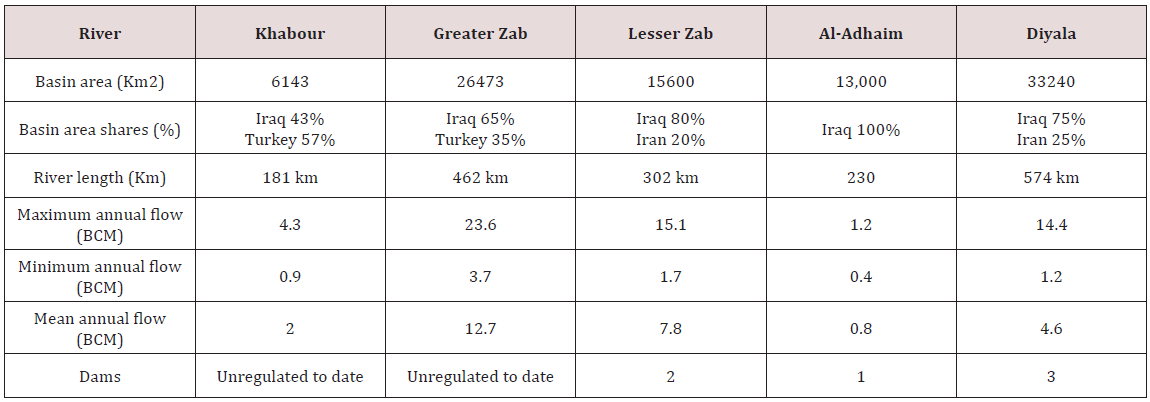
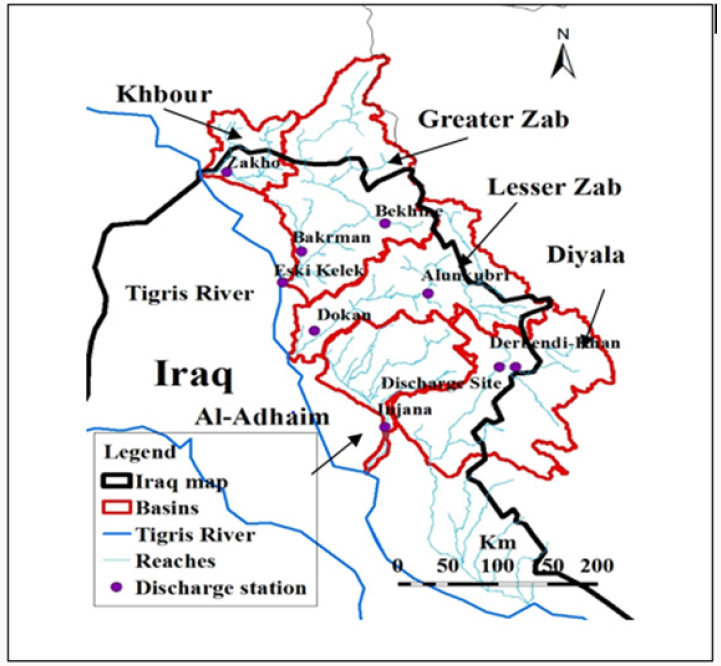
Tigris River has five major tributaries namely Khabur, Greater Zab, Lesser Zab, Al-Adhiam and Diyala Rivers (Figure 1). These tributaries are located in the left bank of the Tigris River between latitudes 33.20N and 37.30N and longitudes 42.90E and 46.90E and have significant contributions to Tigris flow. These tributaries are shared between Iraq and Turkey or Iraq and Iran except Al- Adhiam River. The region is mountainous with many springs in the north and east and changes to flat terrain in the south and west. The mountainous areas generally get higher proportion of precipitation with generally typical near-natural nival regime. The characteristics of the basin of each tributary are summarized in Table 1.
Figure 1: Location map of the study area.
Lupinepublishers-openaccess-Agriculture
Table 1: Description of the basins of the five tributaries of Tigris River.
Lupinepublishers-openaccess-Agriculture

Impacts of Climate Change

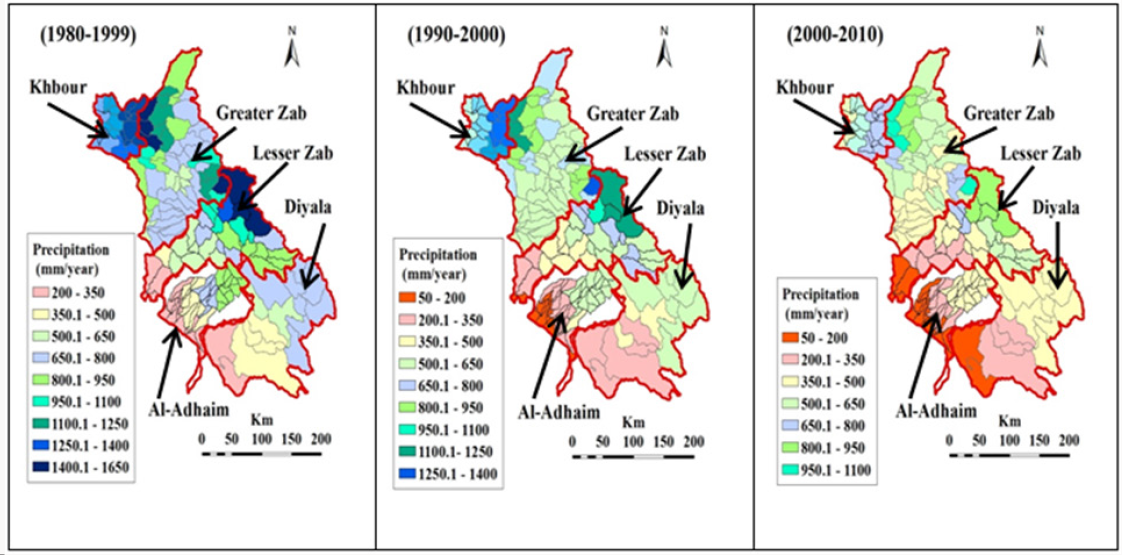
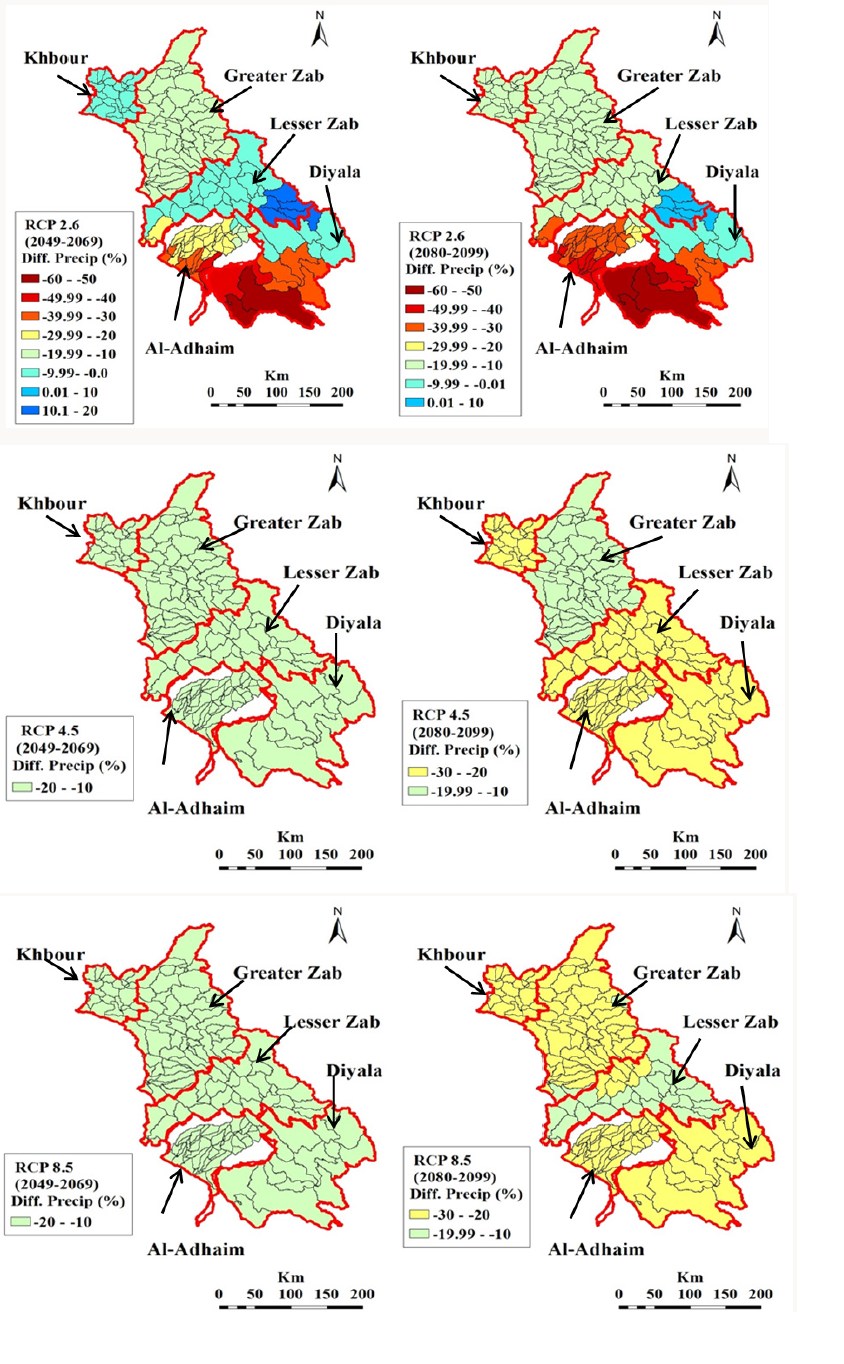
SWAT model was used for hydrologic simulation and GCMs were used for climate forecasts. Basic data requirements for SWAT included digital elevation model (DEM), land use map, soil map, weather data, and discharge data. DEM was extracted from ASTER Global Digital Elevation Model (ASTERGDM) with a 30 meter grid and 1*1 degree tiles (http://gdem.ersdac.jspacesystems.or.jp/ tile_list.jsp). The land cover map was obtained from the European Environment Agency (http://www.eea.europa.eu/data-and-maps/ data/global-land-cover-250m) with a 250 meter grid raster for the year 2000. The soil map was collected from the global soil map of the Food and Agriculture Organization of the United Nations (FAO 1995). Weather data which included daily precipitation, 0.5 hourly precipitations, maximum and minimum temperatures were obtained from the Iraq's Bureau of Meteorology. Monthly stream flow data were collected from the Iraqi Ministry of Water Resources/National Water Centre. To evaluate the performance of SWAT, the sequential uncertainty fitting algorithm application (SUFI-2) embedded in the SWAT-CUP package [10] was used. Figure 2 captures the decade wise changes in precipitation for the past three decades. It is evident from the figures that water availability is decreasing with time. This study considers the period 1980- 2010 as the baseline period for comparisons with future scenarios. Figure 3 captures the changes which are expected in the future from GCM outputs fed into SWAT - outputs from SWAT consisting of 320 HRUs for simulation.
Figure 2: Spatial distribution of precipitation in Northeast Iraq.
Lupinepublishers-openaccess-Agriculture
Figure 3: The impacts of climate change on the precipitation of the five basins (a) Anomaly based on scenario RCP 2.6 for the period 2049-2069, (b) Anomaly based on RCP 2.6 for 2080-2099, (c) Anomaly based on RCP 4.5 for 2049-2069, (d) Anomaly based on RCP 4.5 for 2080�2099, (e) Anomaly based on RCP 8.5 for 2049-2069, and (f) Anomaly based on RCP 8.5 for 2080-2099.
Lupinepublishers-openaccess-Agriculture

Climate Change Adaptation

Although climate change is a physical process linking with alterations in climatic variables, it impacts and also is impacted by social processes associated with the way society evolves over time. Climate change has impacts on social, economic, and environmental systems and forms scenarios for food, water, and health security [11]. The capability of mitigating and adapting to climate change influences is dependent on proactive measures adopted by different socioeconomic groups living in differentiated geographical circumstances [12]. Climate change intensifies the vulnerability of the society. It leads to enhanced water scarcity, exposure to diseases and undermining of growth opportunities. The impacts of climate change in northeast of Iraq will vary geographically. The south part which includes Diyala and Al-Adhiam are projected to be most impacted by droughts and shortened growing seasons. Extreme droughts have categorized that region in the last three decades. Severe drought has caused a reduction in agricultural production especially in the areas of rain-fed crop, which resulted in an observed reduction in farmers' income. The social dimension, which influences physical and economic dimensions, mainly boosts vulnerability to climate change. In light of the sharp decline in oil prices and the increase in terrorist operations which have led to the deterioration of the economy, institutional structures, and individual capabilities Iraq is unable to manage the current climate variability and will struggle with projected changes due to insufficient financial resources available for adaptation and mitigation.
Vulnerability in the context of climate change has three components which are exposure, sensitivity and adaptive capacity [13]. For example, agricultural vulnerability to climate change can be described in terms of exposure to increased temperatures, decreased rainfall and thus reduction in water resources. The sensitivity of crop yields can be described through how sensitive the crops are to these changes. Adaptive capacity is defined as the ability of the farmers to adapt to the effects of this exposure and sensitivity by, for example, growing crop varieties that are more drought-resistant. Recent studies stress the significance of socioeconomic factors for the adaptive capacity of a system, especially underlining the essential role of institutions, governance and management in determining the ability to adapt to climate change [14]. The adaptive capacity of any system is fundamentally shaped by human actions and, it influences both the biophysical and social elements of a system. Generally, agricultural adaptation includes two forms of amendments in agricultural production systems. The first strategy is enhanced agricultural diversification through, for example, using drought tolerant varieties to temperature stresses. The second strategy emphasizes crop management practices, for instance, managing critical crop growth stages by not coinciding with very harsh climatic conditions such as mid-season droughts. According to Orindi [15], shifting the length of the growing period and changing planting and harvesting dates are among the common crop management practices that are used in agricultural adaptation to climate change.
For this study, focus groups of farmers were formed organized by general managers of each catchment. The discussion thread centred on farmers' perception of climate change and the adaptation measures they already have or would take to respond to the negative impacts of climate change. From their answers it became evident that planting trees, crop diversification, changing planting dates, and soil conservation are the major adaptation strategies that farmers recognize as appropriate for rain-fed agriculture. Planting trees - This strategy includes growing trees in the farm to serve as shade against severe temperature. Growing trees and a forestation enhance agricultural productivity, where it often contributes to climate change mitigation through enhanced carbon sequestration [16]. Crop diversification - Farmers grow different crop varieties that have ability to survive in adverse climatic conditions. In addition, growers plant early ripening crop varieties and grow drought tolerant crops and crops that are resistant to temperature stresses. These are significant forms of insurance against rainfall fluctuations [15]. Furthermore, planting diverse crop varieties in the same field or various plots with different crops moderates the risk of whole crop failure because different crops are influenced differently by climate events and thereby gives some minimum assured returns for livelihood security [17,18].
Changing planting dates - Early and late planting is another strategy to adapt to climate change. This strategy enables farmers to protect sensitive growth stages to ensure that these critical stages do not coincide with severe climatic conditions. Soil conservation - Soil conservation practices are to increase productivity on-farm [19-23]. Decreasing rainfall and increasing prolonged periods of drought, due to climate change, are highly likely to reduce crops. Increasing soil health and fertility leads to increase crop productivity, thus serve to moderate the impact of climate change on agricultural productivity [24,25].

Conclusion


Northeast Iraq has witnessed declining water availability in the past few decades and the model predictions are that the situation will get worse in the future. These findings may have far reaching consequences because a large area already suffers from per capita water scarcity. Already a majority of the farmers in the focus groups have observed that the climate has become hotter and drier, and the availability of water has decreased significantly especially in the southern region. This fits with the mathematical model inferences. The good part is that most farmers are willing to adopt modern methods to deal with climate change. A common theme that emanated from the focus groups is that a large proportion of farmers are poor and they cannot sustain consecutive crop losses or very low yields. Some of them have quit farming and have moved into or seeking alternative livelihood. For the stability of the social fabric, it is desirable to entice those people back into farming and for that to happen, financial support would be necessary. However, a large portion of the population is Muslim, and therefore preferably, finance source, destination and transaction process should be free from interest (riba), gambling (maysir), uncertainty (gharar), coercion (ikrah), and forbidden (haram) - directives of Islamic law.


For more Lupine Publishers Open Access Journals Please visit our website: https://lupinepublishersgroup.com/


Follow on Twitter   :  https://twitter.com/lupine_online


Monday, July 15, 2019

Induction of Systemic Acquired Resistance in Papaya by Foliar Application of HrpN Recombinant Protein for Increased Resistance against Papaya Dieback Pathogen - Lupine Publishers

Lupine Publishers - Agriculture Open Access Journals


Abstract


Plants are continuously exposed to undesirable pest and pathogen threats. In response, plants have developed numerous mechanisms to protect themselves against the pathogens. Systemic acquired resistance (SAR) is an inducible disease resistance response in plant species. It is found in a large range of plant species including papaya and characterized by broad spectrum disease control and an associated coordinated expression of a set of pathogenesis related (PR) genes and proteins which are also known as SAR markers. Expression and purification of HrpN from Erwinia mallotivora, the causal agent of papaya dieback, was carried out. In this report, HrpN recombinant protein was tested and characterized for its effect and potential as elicitor that can increase papaya defence against E. mallotivora through the activation of SAR mechanism. Based on disease severity analysis, control plants which were untreated, showed faster disease infection rate and severity when compared to the recombinant protein treated plants. Increased resistance towards the papaya dieback pathogen was shown to be associated with increased expression of selected plant defined genes using quantitative Real Time analysis which were observed after the papaya was sprayed with the recombinant HrpN protein. Based on physiological and molecular analysis, the selected protein has induced SAR; increased selected SAR associated defence gene expression and increased the papaya resistance against the papaya dieback pathogen.
Keywords: Systemic acquired resistance; Recombinant protein; Erwinia mallotivora
Abbreviations: SAR: Systemic Acquired Resistance; E. mallotivora: Erwinia mallotivora; SA: Salicylic Acid; Hrp: Hairpin Proteins; PR: Pathogenesis-Related; MTI: MAMP-triggered immunity; ETI: effector-triggered immunity; SA: salicylic acid; BTH: Benzo Thiodiazole

Core Ideas


a) HrpN recombinant protein was tested and characterized for its effect and potential as elicitor that can increase papaya defence against E. mallotivora through the activation of SAR mechanism.
b) Increased selected SAR associated defence gene expression and increased papaya resistance against the papaya dieback pathogen observed.

Introduction


Papaya is a popular and commercially available fruit in the tropical and subtropical regions. It is highly known not only for its nutritious quality but also for its medicinal functions [1]. During its prime time, Eksotika, Sekaki and Solo were the Malaysia’s flagship varieties for export with an export value of about RM100–120 million per year, a total volume of 58,149 mt which accounted for 21% of the global trade in 2004 [2,3]. Papaya dieback disease caused by Erwinia mallotivora is the main cause for the rapid decline of Malaysian papaya production, amounting to 60% decrease in papaya production [4,5]. When attacked by pathogen, plants defend themselves through activation of plant defence mechanism which includes oxidative burst of cells, alteration in cell wall composition and de-novo synthesis of compounds like phytoalexin and elevated expression of pathogenesis-related (PR) proteins. The plant defence mechanisms include MAMP-triggered immunity (MTI), effectortriggered immunity (ETI) and systemic acquired resistance (SAR) signify different layers of active plant defence strategy [6]. Plants also have the ability to activate quantitative protection against extensive spectrum of microorganisms upon inoculation with a pathogen, exogenous application of proteins from microorganism or through application of chemicals [7].
The elevated resistance of the whole plant is known as SAR which is an inducible defence response present in a wide range of plant species including papaya [8]. Systemic plant resistance or Systemic acquired resistance involves a salicylic acid (SA)-mediated pathway of defence reactions within the plant [9,10]. During activation of SAR, induced plants showed an earlier boost of exogenous salicylic acid and activation of pathogenesis- related (PR) protein genes [11,12]. Production of PR genes/proteins can lead to increased resistance against pathogen attack [13,14]. Initiation and activation of PR proteins cascade can be produced by exposing the plant to a virulent, avirulent, and nonpathogenic microbe, or molecules with low molecular weight and sometimes volatile molecules such as salicylic acid and jasmonate [15- 17]. The inductions of SAR by using external inducers have been investigated in the past in plants such as tobacco [18] and Arabidopsis thaliana [19]. Incitation of defence reaction occurs not just at the establishment of pathogen recognition but additionally in distal regions of the plant and can last for weeks upon induction [20]. SAR is an effective innate immune response that offers protection against certain infection of pathogens. SAR may also be introduced by treating plants with salicylic acid (SA) and SA analogues; 2,6- dichloroisonicotinic acidity (INA) and benzothiodiazole (BTH) [21-23].
Phytopathogens are known to secrete proteins and virulence factors collectively known as effectors that are essential for pathogenesis and colonization of their host plants [24]. Pathogenicity of E. mallotivora depends on these effectors, which control the pathogen ability to cause disease and to elicit specific defence responses in papaya plants [25]. Erwinia mallotivora genome was already sequenced and bioinformatics tools were utilised to predict genes that potentially encode virulence factors and toxins along with other molecules that promote pathogenesis [26]. Like many other plant pathogenic bacteria, E. mallotivora contains type III secretion system (T3SS) that delivers effectors proteins into host plant. The T3SS apparatus is a key virulence determinant in many Gram-negative plant bacteria. Due to its importance, a lot of studies have been conducted to disable or block the function of T3SS by targeting known T3SS processes [27]. This could serve as a method to control plant microbial-associated diseases.
Effector proteins as virulence factors are known to suppress diverse signalling pathways required for plant innate immunity [28]. Apart from being effectors, some effectors proteins, known as hairpins, have been revealed to elicit plant defence and SAR responses [29]. Type III secreted hairpins are glycine-rich and also heat-stable proteins that are secreted from Gram-negative plantpathogenic bacteria. The hairpin proteins have been proven to elicit defence response and activate SAR for increased disease tolerance against diverse plant pathogens [23]. In selected cases, during fungial, oomycetal or plant pathogen attack, increased defence responses without the symptom exhibited by hypersensitive response cell death were recorded in plants treated with foliar application of hairpins proteins or genetically modified plants that constitutively expressed hairpins genes. This was observed in Arabidopsis after spray treatment with E. amylovora HrpN [30]. Activation of activated SAR in the plant conferred disease resistance to Hyaloperonospora sp. and Pseudomonas syringae pv. Tomato and in addition stimulated the expression of the pathogenesis-related (PR) 1 genes [31].
Another successful research finding includes reduced diseases caused by Phytophthora infestans and Botrytis cinerea in tomato through application of HrpN hairpin proteins [32]. Rice sprayed with Hpa1, another type of Hrp protein also showed strong resistance to X. oryzae pv. oryzae and Magnaporthe grisea [33]. Past studies have implied SAR strategy as another useful approach for controlling plant diseases through the activation of host plant defences by application of various agents or external inducers. Thus, this research aims to assess application of selected recombinant hairpin protein from the papaya dieback pathogen for SAR activation as an alternative new strategy to control papaya dieback disease. In an effort to develop recombinant proteins as potential SAR inducer, cloning and expression of HrpN from E mallotivora was carried out in a bacterial system. Our study is carried out to evaluate the effectiveness of HrpN recombinant protein in inducing Systemic Acquired Resistance (SAR) in papaya for enhanced disease resistance to papaya dieback pathogen.

Materials and Methods


Bacterial strains and growth conditions
Escherichia coli strains, Top10 (Invitrogen,USA) and BL21, were cultivated and grown in LB medium at 37°C respectively. Antibiotic ampicillin (Amp) was used at the concentration of 50μg/ml where required. Erwinia mallotivora was grown in LB broth at 28 °C.

Recombinant protein cloning, expression and purification

The HrpN gene was isolated from Erwinia mallotovora. Sets of primers, termed HrpN forward (ATGAGTCTGAATACGAGTCC) and reverse (GCCGCGTCAGTTTGCTTCGT) was designed to incorporate selected restriction enzymes sites to facilitate the cloning processes. Erwinia mallotivora DNA was isolated from E. mallotivora grown in LB broth at 28°C overnight using bacterial genomic extraction kit (Sigma Aldrich). Genomic extractions were carried out according to the manufacturer’s instruction. The polymerase chain reaction (PCR) was performed using the E. mallotivora DNA as the template and specific primers that target the HrpN region. Cycle parameters for PCR included an initial incubation time of 3 min at 95°C, 30 cycles of 30 sec at 94°C, 1 min at 55°C for annealing and 1 min at 72°C for extension, and followed by final elongation for 10 min at 72°C. The PCR products were visualised by agarose gel electrophoresis, gel-purified and cloned into pGEMT (Promega) according to the manufacturer’s instruction. Transformed cells were plated out on the LB plate supplemented with 100g/ml ampicillin and 20g/ ml X-gal to allow blue and white colonies selection. The gene was then subjected to sub clone into Pet-20b expression vector and transformed into BL21 E. coli expression strain. For expression of HrpN, the PET-20b/HrpN transformed bacteria were selected on LB agar plates containing 100g/ml ampicillin. A single colony of the transformed bacteria was inoculated in 5.0ml LB medium containing appropriate antibiotic for overnight cultivation at 37°C.
Aliquots of the culture were inoculated into 50ml LB medium with 50g/ml ampicillin at 37°C until the OD600 reached 0.5. Isopropyl-β-D-thiogalactopyranoside (IPTG) was added to a final concentration of 0.5 mM to induce the expression. The expression was carried out for six hours at 37°C and the bacteria were harvested afterwards by centrifugation at 2500g for 15 minutes. The bacterial pellet was resuspended in 20mM Tris-HCl, pH 8.0, and lysed with a sonicator or treated with Bugbuster reagent (Novogen). For confirmation analysis, lysate, soluble and insoluble fractions (pellet) from each expression were analysed by SDSPAGE and Western Blotting using specific anti-His antibody. For large scale purification, the expressed HrpN cells were treated with Bugbuster reagent (Novogen) to be lysed then purified using Ni-NTA column (His tag protein purification) via the Acta Prime Chromatography System. The purified proteins were quantified using Bradford protein assay and also analyzed by SDS PAGE followed by Coomassie Brilliant Blue Staining. For Western Blot analysis, 20μg of protein from each samples were separated by 10% SDS PAGE and transferred to PVDF membrane before being probed using anti-His antibody with gentle agitation for 2h and further incubated for 2h with anti-mouse IgG alkaline phosphatase conjugate. The membrane was washed, added with the substrate solution (BCIP/NBT) and incubated until the bands appeared.

Plant Growth


Carica papaya (Eksotika I) seeds were germinated in small polystyrene cups containing potting soil. In addition to these, two months old papaya seedlings were obtained from MARDI Pontian. Johor, Malaysia. Soil rich in organic matter and nutrients with a mix of compost was used. Fertilisation and watering were conducted accordingly. The plants were continued to be grown in the greenhouse at the MARDI glasshouse house complex under glasshouse conditions.

Recombinant protein application and pathogen inoculation

A set of formulation treatments and controls were tested for their effectiveness in inducing SAR and protecting the plants against papaya dieback disease. Protein inducer treatments were carried out in 4-6 months old papaya seedling using foliar spray application solution for each seedling for three times at one week interval. Each seedling was inoculated (at the first three nodes) with 10ml of pathogen (E. mallotivora) at the concentration of 1x10⁶ cfu one week after the third inducer treatments. Water treated plants were included as control.

Symptom evaluation

After treatments with recombinant protein and the pathogen inoculation, effects of the pathogen inoculation were evaluated through disease severity (DS) statistical analysis. After treatments with salicylic acid (SA), effects of the pathogen inoculation were evaluated for disease severity. For disease severity, index 5 (on 1 to 5 scales) on each plant was recorded according to stem blackening and the mean value was calculated. For evaluation of stem blackening, they were recorded according to the scale of 0=symptomless, 1=leaf vein blackening, 2=leaf vein blackening and slightly wilting, 3=leaf stalk wilting, 4=stem blackening and 5=plant died. Data was analysed using analysis of variance (ANOVA) followed by comparison of means using Duncan multiple range test (DMRT) [34].

Tissue collection, RNA extraction and pathogenesis-related gene analysis via RT qPCR

For molecular analysis, leaves were collected on day 20 after the first recombinant HrpN foliar application, frozen in liquid nitrogen, and stored at -80°C until further analysis. Leaf tissue was grounded to a fine powder, and RNA was extracted using GeneJet (Thermo Scientific) kit following the manufacturer’s instruction. For qPCR, 2ug of RNA was DNAse- treated to remove genomic DNA contamination and the transcripts were converted into cDNA using Biorad Reverse Transcription in accordance with the manufacturer’s protocol. The resulting cDNA was used as the template for qPCR using primers designed based on known pathogenesis-related proteins in papaya [35]. Two housekeeping genes-actin and 40SRNP-were used as the reference genes for normalization of the expression fold. SensiFast SYBR Hi-ROX kit (Bioline, USA) was used for the RT-qPCR following the manufacturer’s protocol. The experiment was carried out using Bio-RAD CFX96 real-time PCR system (Bio-Rad,USA ). The expression profiling graph was plotted using the Bio-RAD CFX96 Manager software (Bio-Rad, USA).

Results and Discussion


Cloning, expression and purification of selected recombinant protein

In this report, we attempted to look for the after-effect of foliar spraying of a T3SS protein termed HrpN from E. mallotivora, the causal agent of papaya dieback disease in Malaysia. The likelihood of activation of disease resistance mechanism via SAR against the pathogen in papaya was investigated. Formerly, Peng [36] showed that hpa1 gene of Xanthomonus oryzae pv. oryzae enhanced defence responses to diverse pathogens in tobacco. For this study, cloning of HrpN from E. mallotivora was carried out to produce recombinant HrpN. In an effort to develop a bacterial expression system for selected HrpN from E. mallotivora, gene encoding HrpN was inserted into the pET-20b(+) bacterial expression vector from Novagen. Based on the restriction enzyme digestion and sequencing analysis, we have successfully cloned HrpN gene into pET-20b(+) expression vector. Expression of the HrpN gene in pET-20b expression vector was induced in the presence of isopropyl-beta- D-thiogalactopyranoside (IPTG). The proteins of the uninduced lysates, induced lysates, the soluble fraction and the insoluble fraction were analyzed using SDS–PAGE, stained with Coomassie Blue and Western Blot analysis. The molecular weight of the expressed proteins was equivalent to the predicted molecular weight of the HrpN which was estimated to be approximately 30kDa.
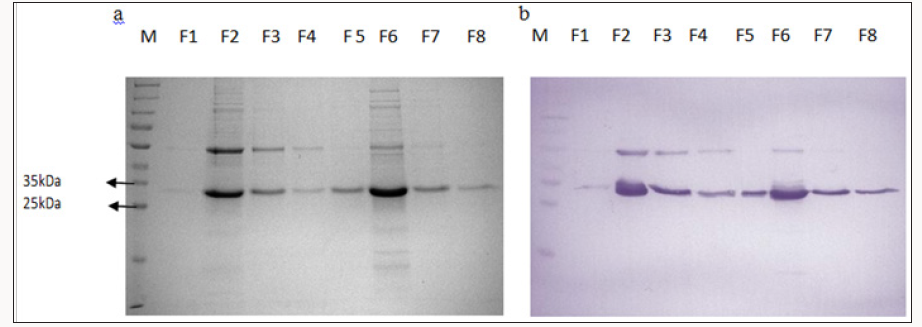
Recombinant HrpN proteins were expressed as fusion proteins with an N-terminal His tag, enabling affinity purification of proteins using Nickel NTA column. To obtain larger amount of expressed HrpN, the expression was carried out in large scale (2 litre cultures) and purified 35kDa 25kDa using the Ni-NTA affinity column via Acta Prime Chromatography System. After purification, the major contaminating bands and impurities were eliminated during the affinity chromatography process. 20ug of proteins from each fraction were analyzed using SDS–PAGE, stained with Coomassie Blue and Western Blot using the anti-His antibody. Figure 1 shows the chromatogram of elution fractions of HrpN using Ni-NTA column. The fractions containing the intended HrpN recombinant proteins were either freeze-dried or stored at -80ºC for further usage. Approximately 50-100mg of pure recombinant protein was normally obtained from every 2 litre cultures of LBBroth expression culture, induced with 0.5mM IPTG, 37°C for 2 hours. The amount of pure HrpN protein was sufficient for the foliar application treatment of papaya seedlings to determine the effect of SAR inducement for increased tolerance to papaya dieback disease.
Figure 1: SDS PAGE (a) and Western Blot (b) analysis of recombinant HrpN proteins obtained through large scale expression after purification via inclusion bodies prep and Ni- NTA affinity column.(M: Protein ladder, F1-F8 : Fractions collected after Ni-NTA affinity column).
Lupinepublishers-openaccess-Agriculture

Recombinant protein treatments and pathogen inoculation/ pathogen infection assay for SAR assessment

The HrpN recombinant protein was tested to evaluate its effectiveness in inducing SAR in papaya for elevated disease resistance response and to suppress the development of papaya dieback disease. The experiment consisted of 10 replicates for each treatment and control, and was conducted at MARDI’s Biotechnology & Nanotechnology infection house using 4 monthold papaya seedlings arranged in Randomized Completely Block Design (RCBD) with two control treatments. Tap water was used to water the plants daily. Standard fertilisation and pest control programs were applied for plant maintenance. Protein inducer treatments were carried out using foliar spray application solution for each seedling for three times at one week interval. Water treated plants were included as control. The effect of HrpN protein treatment on plant vigour was assessed beforehand for two months. However, no differences in plant height, stem diameter and root mass were observed between control and HrpN- treated plants indicating there was no effect of the treatments on the plant health. To assess the protein ability to increase papaya tolerance against the papaya dieback pathogen, inoculation of ~1x 10⁸ E. mallativora was carried out on the treated seedlings three week after the first foliar spraying for the response to disease symptoms and inducer treatments. Disease development was supervised based on quantitative assessment by assessing percentage of Disease Severity (%DS). Disease severity treatment were computed based on the formulation below using the disease symptoms scoring of 0=symptomless, 1=leaf vein blackening, 2=leaf vein blackening and slightly wilting, 3=leaf stalk wilting, 4=stem blackening and 5=plant died. The disease severity index (DSI) was computed according to the formula described by Campbell and Madden [37] and Kim [34].
Lupinepublishers-openaccess-Agriculture
Where,
DSI=Disease Severity Index
Σab=Sum of the product of assessed plants with their corresponding score scale
N=Total number of assessed plants K=Highest score scale.
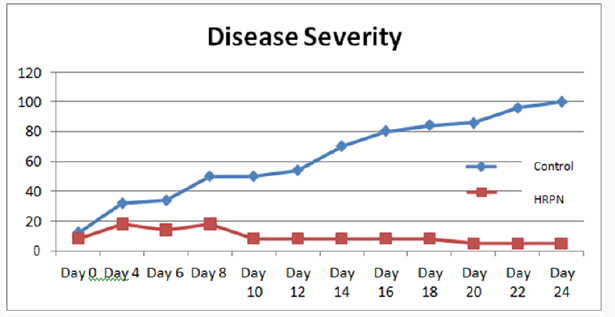
Three to four days after pathogen challenge, papaya dieback disease symptom was visually rated by assessing the percentage of disease progress for the disease severity assay until 25 days post infection. In general, the HrpN formulation showed a reduced degree of symptom compared to the water control in two repeated trials. Results presented here demonstrated that the formulation increased disease tolerance to papaya dieback as previously demonstrated. The disease severity assay (DS) measure was used to indicate the effectiveness of treatments in suppressing the disease. The disease symptom was shown to develop much slower in the seedlings treated papaya plants compared to positive control treatment. Both treated and control plants started showing the stage 1 symptoms of papaya dieback disease approximately on day 4. However, the disease severity percentages were observed more on control plants when compared to treated plants. Subsequently, the severities of disease in control plants increased rapidly with 70% severity on day 14 and continue to rise until day 24 where all controls were observed to succumb to the pathogen infection. Interestingly reverse effect was observed in treated plants. Although plants in both groups exhibited the stage 1 symptom approximately on the same day post infection, the disease severities were shown to decrease in treated plants post infection with the bacterial dieback pathogen. Although initial disease symptom of brown discoloration was observed at early days post infection, all of the leaves in treated plants that showed the early symptoms started to drop between day 6 to day 10 post infection, and new shoot continued to be produced. These resulted in the decreased of severity in treated plants as shown in Figure 2.
Figure 2: Disease severity analysis for assessment of recombinant HrpN as SAR inducer.
Lupinepublishers-openaccess-Agriculture
The analysis of the disease severity demonstrated that the treated papaya plants showed significantly lower disease severity compared with positive control treatments. Based on statistical analysis, there was highly significant relationship between control and the HrpN-treated plants. The obtained result clearly revealed that the HrpN was effective in increasing resistance against papaya dieback pathogen. The use of hairpin proteins from pathogen has been shown to increase the host against the intended pathogen. Choi [38] reported enhanced disease resistance to both X. oryzae pv. oryzae and Magnaporthe grisea in rice and Arabidopsis plants that were highly expressed with hpa1 gene. An elicitor, pemG1, a hairpin gene which was isolated from M. grisea was also shown to increase disease resistance in transgenic rice containing the hairpin gene. The expression of defence related phenylalanine ammonia-lyase genes were also observed [8]. Similarly, the HrpN formulation showed promising results in inducing SAR in papaya after the papaya seedlings were applied with the protein. The development of the disease symptoms was much slower when compared to positive control treatment. The result suggests that application of SAR inducers certainly has the potential to suppress the development of papaya dieback disease.

Real Time qPCR validation analysis

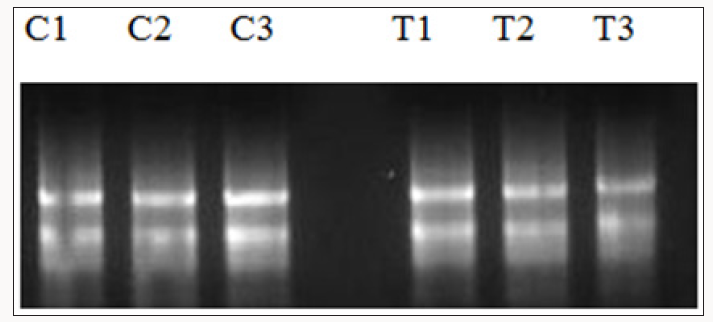
Analysis of defence mechanism can provide valuable details for papaya dieback disease management strategies. This will offer valuable information for the development of durable, economical, and broad spectrum management approach for the disease. Accordingly, to determine the effect of the formulations on the expression of selected papaya defence genes expression, leaves from papayas that were applied with formulations and control plants were taken from each treatment and control replicates. Each sample has at least three biological replicates representing different individual trees. All samples were ground and stored in -80°C freezer. RNA extraction method was carried out using Plant RNA extraction kit (Thermo Scientific) following the manufacturer’s instruction. Through this method, RNAs extracted were shown to be intact and had a high concentration (Figure 3). The RNAs obtained were transcribed and used for Real Time PCR analysis. Previously, Norliza [35] showed that several pathogenesis related genes which include PR-1b, PR 1, PR1d and NPR1 have the potential to be used as SAR markers due to the increasing levels of genes expression levels few days post treatment with known SAR inducers. These genes were used to investigate the plant defence response after application with the inducers.
Figure 3: RNA obtained from treated and control plants for validation with SAR markers via Real Time PCR. C1-C3 are control untreated plants while T1-T3 are plants treated with HrpN recombinant proteins.
Lupinepublishers-openaccess-Agriculture
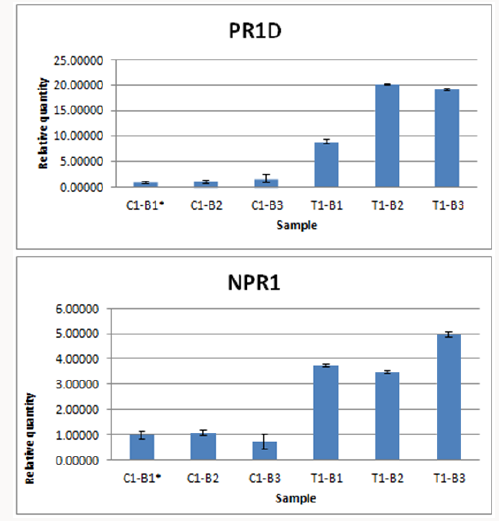
Figure 4: Normalized fold expression of PR1d and NPR1 in control plant (non-treated) and recombinant HrpN protein treated papaya leaf tissues.
Lupinepublishers-openaccess-Agriculture
The expression profile of two defence genes, PR1d and NPR1 that were correlated with SAR inducements in papaya in control plant (non-treated) and recombinant HrpN protein treated papaya leaves tissues was conducted with Actin and 40snp used as the reference gene for normalisation [39,40]. As shown in Figure 4, the normalised fold expression of recombinant HrpN treated papaya leaves tissues were higher than the expression in control plant tissues. By using ΔΔCT method, the increased in expression fold of ~10 to ~20 of PR1d gene in papaya plants treated with HrpN recombinant proteins in comparison of each control were observed. Seemingly, the fold increased expression of NPR1 gene was also observed in plants treated with HrpN recombinant proteins in comparison of each control with fold changes around 3-5 fold (Figure 4). Salicylic acid (SA) is a vital hormone in plant immunity and NPR1 is a gene that is triggered by SA. NPR1 is known to be involved in the SAR activation for the regulation of plant defence genes. NPR1 has been shown to induce pathogenesis related (PR) proteins after pathogen attack such as by bacteria and fungi [41]. NPR1 which contains conserved ankyrin repeat domain, a broad complex, tramtrack, and bric-à-brac/poxvirus and zinc finger (BTB/POZ) domain is the master regulator of salicylic acid mediated responses. In Arabidopsis, NPR1 was shown to control the beginning of SAR and other immune signaling pathways for basal defence and mediating crosstalk between SA along with other phytohormones. During genetic screens for mutants defective in SA responses; mutants with defects in NPR1 failed to resolve various SAR-inducing treatments, displaying little expression of pathogenesis related (PR) genes and exhibiting elevated the likelihood of infections [42,43].
Interestingly, NPR1 shares similar structural features with mammalian immune cofactor IκB, that engages in crucial roles in inflammation, immunity, cell proliferation, differentiation, and survival [44]. Norliza [40] showed that a set of PR defence related proteins were not significantly expressed in E. mallotivora infected plants through iTRAQ and quantitative Real Time PCR. These data indicated that the expression of the selected PR genes were not high enough to protect the papaya from the pathogen attack. However, upon application of recombinant HrpN, the expression fold of PR1d genes was increased to ~10 to ~20 in three different treated plants. SAR marker gene pathogenesis-related gene 1 (PR1) which was isolated from Brassica juncea and named as BjPR1 also demonstrated elevated expression in leaves of B. juncea after Alternaria brassicae infection via Quantitative real-time PCR (qRT-PCR) analysis. Furthermore, BjPR1 gene was shown to be strongly induced following SA treatments, suggesting its roles in SAR mediated plant defence [45]. From the quantitative Real Time PCR analysis, it was suggested that the application of recombinant HrpN increased the plant defence related gene expression that are related to the SAR. Furthermore, the expression pattern of the selected genes has the potential to be used in the development of molecular markers for the identification of resistant cultivars or donor varieties for molecular breeding of papaya for increased tolerance or resistance against the papaya dieback pathogen [46].

Conclusion


Erwinia mallotivora HrpN was successfully cloned and expressed in the E. coli system. Foliar application of the HrpN recombinant protein was tested to evaluate its effectiveness in inducing SAR in papaya for enhanced disease resistance to papaya dieback pathogen. Phenotypic data was taken to see if there was any effect of the recombinant protein to the papaya plants. It was concluded that recombinant protein is safe to be used as SAR chemical inducer. Control plants, which were untreated, showed faster disease infection rate when compared to treated plants as shown by the disease severity assay. It can be concluded that for positive SAR inducement, recombinant HrpN is sufficient to enhance the defence system of papaya to combat papaya dieback disease.

Acknowledgment


Evans EA, Ballen, FH (2012) An overview of global papaya production, trade, and consumption. Topics: Food and Resource Economics, Extension service Institute of Food and Agricultural (IFAS): 1-7


For more Lupine Publishers Open Access Journals Please visit our website


Wednesday, January 9, 2019

Can Socio-Economic Incentives Improve the Livelihoods of Communities Surrounding Rehabilitated ecosystems? An empirical evidence of Kondoa Rehabilitated Rural Areas, Dodoma, Tanzania: (CIACR) - Lupine Publishers


Communities need motivation in order to effectively and sustainably participate in conserving the surrounding environmental resources. However the contribution of socio-economic incentives towards improving the livelihoods of communities surrounding rehabilitated ecosystems remains scantly known. This study was an attempt to reveal the less known contribution of socioeconomic incentives towards improving the livelihoods of communities surrounding rehabilitated ecosystems drawing empirical evidences from Kondoa Rehabilitated Rural Areas (KRA), Dodoma, Tanzania. The cross-sectional research design was employed. Simple random sampling technique was used to select 30 respondents from each of the four study villages and make a total of 120 respondent households.
https://lupinepublishers.com/agriculture-journal/fulltext/can-socio-economic-incentives-improve-the-livelihoods-of-communities-surrounding-rehabilitated-ecosystems.ID.000115.php
https://lupinepublishers.com/downloadPdf.php?folder=agriculture-journal&file=CIACR.MS.ID.000115

For more Lupine Publishers Open Access Journals Please visit our website
For more Agriculture Journal articles Please Click 

Saturday, January 5, 2019

Women Participation in Cotton Farming in Simiyu Region, Tanzania: Undefined Paradoxical Praxis: (CIACR) - Lupine Publishers


Cotton stands as one of the key cash crops in the Tanzanian economy and the second largest agricultural export product with over 70%-80% of it being exported. Despite the widely known merits, significances and challenges of integrating gender equality and equity in economic activities, less remains to be known on actual defined participation and contribution of women in cotton farming in Simiyu region, Tanzania. This paper attempted to reveal the existing paradoxical praxis in the course of establishing women contribution in cotton farming in Simiyu region. Specifically, this paper sought to: (a) assess the level of women participation in cotton farming in Simiyu region (b) examine factors affecting women participation in cotton farming in Simiyu region (c) assess the perceived role of women participation in the cotton farming in Simiyu region. The descriptive cross-sectional research design was employed. Simple random sampling technique was used to select a total of 120 respondent households from the selected villages from region's districts namely, Maswa, Meatu, Bariadi, Busega and Itilima. Data were collected using pre-tested and pilot-tested questionnaires, focus group discussions and interviews. Ms-Excel and SPSS 20.0 computer software were used to analyze data. Descriptive statistics were employed to reveal various parameters in the study. The study findings revealed low level of women participation in cotton farming (23.3%) compared to the revealed level of male (76.7%) of the total households involved in the questionnaire survey; suggesting the presence of less number of women who owns lands in the study area. The revealed paradoxical praxis in the study area entails the fact that women who don't stand as households heads don't own piece of land and the whole process of cotton farming.


For more Lupine Publishers Open Access Journals Please visit our website
For more agriculture peer reviewed journals articles Please Click 

Wednesday, January 2, 2019

Post-Vaccination Immunity in FMD: (CIACR) - Lupine Publishers


The general opinion of scientists from different countries is that the 21st century is the age of biotechnology, one of the directions of which is the creation of bio products. Bio preparations are used to increase efficiency in the production of food products of plant and animal origin; neutralizing environmental pollutants with the production of useful products from wastes; ensuring the diagnosis, prevention and treatment of multi cellular organisms, including humans and solving many other problems of mankind. A special place is occupied by immunology, the science of the structure and functions of the immune system and the study of immunity, a specific biological property of multi cellular organisms, aimed at protecting against genetically alien factors (microorganisms, bacteria, viruses, plants and fungi), foreign molecules and others. Immunity also provides immunity to the body from infections when re-encountering the pathogen.


For more Lupine Publishers Open Access Journals Please visit our website
For more Agriculture Open Access Journal articles Please Click 

Saturday, December 29, 2018

Women Participation in Cotton Farming in Simiyu Region, Tanzania: Undefined Paradoxical Praxis: (CIACR) - Lupine Publishers


Cotton stands as one of the key cash crops in the Tanzanian economy and the second largest agricultural export product with over 70%-80% of it being exported. Despite the widely known merits, significances and challenges of integrating gender equality and equity in economic activities, less remains to be known on actual defined participation and contribution of women in cotton farming in Simiyu region, Tanzania. This paper attempted to reveal the existing paradoxical praxis in the course of establishing women contribution in cotton farming in Simiyu region. Specifically, this paper sought to: (a) assess the level of women participation in cotton farming in Simiyu region (b) examine factors affecting women participation in cotton farming in Simiyu region (c) assess the perceived role of women participation in the cotton farming in Simiyu region. The descriptive cross-sectional research design was employed. Simple random sampling technique was used to select a total of 120 respondent households from the selected villages from region's districts namely, Maswa, Meatu, Bariadi, Busega and Itilima. Data were collected using pre-tested and pilot-tested questionnaires, focus group discussions and interviews. Ms-Excel and SPSS 20.0 computer software were used to analyze data. Descriptive statistics were employed to reveal various parameters in the study. The study findings revealed low level of women participation in cotton farming (23.3%) compared to the revealed level of male (76.7%) of the total households involved in the questionnaire survey; suggesting the presence of less number of women who owns lands in the study area. The revealed paradoxical praxis in the study area entails the fact that women who don't stand as households heads don't own piece of land and the whole process of cotton farming.


For more Lupine Publishers Open Access Journals Please visit our website
For more Agriculture Open Access Journal articles Please Click 

Wednesday, December 26, 2018

Post-Vaccination Immunity in FMD: (CIACR) - Lupine Publishers


The general opinion of scientists from different countries is that the 21st century is the age of biotechnology, one of the directions of which is the creation of bio products. Bio preparations are used to increase efficiency in the production of food products of plant and animal origin; neutralizing environmental pollutants with the production of useful products from wastes; ensuring the diagnosis, prevention and treatment of multi cellular organisms, including humans and solving many other problems of mankind. A special place is occupied by immunology, the science of the structure and functions of the immune system and the study of immunity, a specific biological property of multi cellular organisms, aimed at protecting against genetically alien factors (microorganisms, bacteria, viruses, plants and fungi), foreign molecules and others. Immunity also provides immunity to the body from infections when re-encountering the pathogen.

https://lupinepublishers.com/agriculture-journal/fulltext/post-vaccination-immunity-in-fMD.ID.000113.php
https://lupinepublishers.com/downloadPdf.php?folder=agriculture-journal&file=CIACR.MS.ID.000113


For more Lupine Publishers Open Access Journals Please visit our website
For more Agriculture Open Access Journal articles Please Click 

Tuesday, December 18, 2018

Efficacy of Selected Attractants for Monitoring the Populations of the Redbay Ambrosia Beetle Xyleborus Glabratus Eichhoff (Coleoptera: Scolytidae) and Other Bark Beetles in the Florida Panhandle: (CIACR) - Lupine Publishers


The redbay ambrosia beetle, Xyleborus glabratus Eichhoff (Coleoptera: Scolytidae) is a non-native insect first discovered in the United States in 2002 in Port Wentworth, Georgia. This beetle has a direct impact on the natural forest ecosystem because it vectors the fungus Raffaelea lauricola, which causes laurel wilt disease, a vascular disease of trees in the family Lauraceae, such as redbay, sassafras, camphor, silkbay, pondspice, bay laurel, the endangered pondberry and the economically important avocado. Originally from Southeast Asia the beetle has spread to coastal forests of Alabama, Florida, Georgia, Mississippi, North Carolina and South Carolina. This study surveyed previously un-surveyed areas of the Florida Panhandle, the Apalachicola National Forest usinga) A mixture of manuka and phoebe oil, b) Ethanol gel attractants and c) Hand sanitizer.
The redbay ambrosia beetle was not detected in the Apalachicola National Forest; however, another 2,394 specimens of beetles belonging to the tribe Xyleborini and related tribes of the Scolytinae were found. Of these, more than 90% belonged to introduced (invasive) species. Gel ethanol was significantly more attractive to ambrosia beetles than the manuka and phoebe oil mixture. When hand sanitizer was substituted as a source of ethanol, no significant differences were found between the numbers of beetles captured by the manuka and phoebe oil mixture and by hand sanitizer. Thus, hand sanitizer was as attractive as the commercial product. The presence of high numbers of invasive beetles suggests that an even larger number of fungi are being introduced and they are potential threats to the trees in the Apalachicola National Forest's ecosystems. Hand sanitizer attractant could be used as an alternative to gel ethanol as it is cost-effective, affordable, and sustainable.
For more Lupine Publishers Open Access Journals Please visit our website
For more Agriculture Open Access Journal articles Please Click 

Lupine Publishers Journal of Agriculture and Current Research

Nutrients Intake and Digestibility of Wild Cocoyam (Caladium Bicolor) based Diets by West African Dwarf Bucks Abstract   Feed consumed by ...