Abstract
Purpose:Field and nursery experiments were conducted in Akure
in the rainforest zone of Nigeria to evaluate the effects of
woodash, pig, goat and poultry manures on the soil fertility
improvement, growth, grain yields parameters, crude fibre, crude ash,
protein and nitrogen of wheat (Triticum aestivum L) in 2014 and 2015
cropping seasons.
Methods.The four (4) organic fertilizer treatments were applied each at 6t/ha with a reference treatment NPK 15-15-15
fertilizer applied at 300kg/ha and a control treatment which were replicated four times and arranged in a randomized complete
block design.
Results:The results showed significant increases (P<0.05)
in the soil nutrients, growth and grain yield, crude fibre, protein,
nitrogen, crude ash, straw yield and root biomass of wheat under
different organic fertilizers application compared to the control
treatment. The highest values of wheat plant height, leaf area, number
of tillers, stem girth, number of spikelets/plant, leaf
population, straw weight, root biomass, grain yields, crude fibre, crude
ash, nitrogen and protein were obtained with the application
of poultry manure followed by NPK 15-15-15 fertilizer, pig, goat manures
and wood ash respectively. Wheat grains yield, straw
weight, root biomass, crude fibre, % nitrogen, crude fibre and crude
ash, plant height leaf area, number of tillers, stem girth, number
of spikelets/plant and leaf population increased by 13%, 2%, 1%, 27%,
33% , 33%, 27%, 14%, 10%, 2%, 11% and 15% respectively
with the application of poultry manure compared to NPK 15-15-15
fertilizer. Wood ash application produced the highest values of
soil pH, K, Ca and Mg while the application of poultry manure treatment
gave the highest values of Soil O.M, N and moderate values
of P, K, Ca and Mg. NPK 15-15-15 fertilizer application decreased soil
O.M, Ca, Mg and had the highest K/Mg, K/Ca and P/Mg ratios
of 85:1, 127:1 and 1280:1 compared to 3:1 K/Ca, K/Mg 4:1 and P/Mg 57:1
in poultry treatment.
Conclusion:Poultry manure applied at 6t/ha gave the best
results in improving soil properties, growth, grain yield crude ash,
crude fibre, nitrogen and crude protein of wheat and this was because of
its balanced nutrient contents and the least C/N ratio which
enhanced faster decomposition and uptake of nutrients.
Keywords: Domestication; Growth; Yield of wheat; Soil fertility improvement; Proximate analysis and organic fertilizers
Wheat (Triticum aestivum L) belongs to the family Poaceae
(Gramineae) and originated from Ethopian Highlands [1]. Wheat
is one of major crop in the temperate countries used for human
food and livestock and can be grown in different agro-climatic
zones Iftikhar [2] and Hussan [3]. Shewry [4] reported that wheat
whole grains contributed essential amino acids, minerals, vitamins,
beneficial phytochemicals and dietary fibre components to the
human diet. Besides, wheat grain is a staple food used to make
flour for leavened, flat, and steamed breads, biscuits, cookies, cake,
breakfast cereal, pasta, noodles, fermented alcoholic beverages
(beer) and biofuel Sharma [5]. They reported further that the
gluten protein fraction in wheat confers the visco-elastic properties
that allowed the dough to be processed into above mentioned food
products. Shewry [6] also explained that high content of starch (60-
70%) in wheat whole grain and relatively low protein content (8-
15%) made the crop still important source of calories and protein
for human and livestock nutrition. Therefore, the nutritional
importance of wheat proteins should not be under estimated
particularly in less developed countries where bread, noodles,
burger and other products provide a substantial proportion of the
diet. Despite the economic and nutritional importance of wheat
cultivation in Nigeria and other African countries, its production
output has not met the current high demand by the people because
of low yield. The wide gap in the supply and demand for wheat in
Nigeria has put serious pressure on the country foreign exchange
reserve. Central Bank of Nigeria CBN [7] reported that Nigeria
spent N1.30 trillion naira annually to import wheat for domestic
and industrial uses which cannot be sustained because of dwindling
oil prices.
The trend of low wheat yield could be attributed to factors
such as lack of improved agronomic practices for its cultivation
by farmers, vagaries of weather conditions and climate change,
shortage of sufficient water and mineral nutrients, effects of pests
and diseases and increased population pressure on land which
allowed continuous cultivation without fertilizer use. Therefore,
different efforts meant to increase soil nutrients (i.e soil fertility
improvement) are limited by high cost of inorganic fertilizers and
the effect of the continuous use of such fertilizers on the destruction
of soil properties Moyin [8]. Current and future concerns for
researchers, agronomists, food policy makers and processors are
to look for ways of sustaining increased wheat production and
quality with reduced inputs of agro-chemicals, inorganic fertilizers
and encouraged massively the use of low cost organic fertilizers
for both human and livestock nutrition. This justifies the need
for the use of poultry, pig, goat manures and woo dash as source
of fertilizers for soil fertility improvement in this research study.
In-addition, wheat has not been widely domesticated in Nigeria,
West African countries and other regions in the world with
similar climatic conditions. The few farmers growing wheat in the
Northern regions of Nigeria where rainfall is very low (600mm/
annum) depended heavily on irrigation which is very expensive, technical and increased the cost of production. However, there
have been no traces of wheat cultivation in the South West Nigeria,
where rainfall is bi-modal between 1000-2064mm per annum and
annual temperature between 29 -32oC. Feldman [9] reported that
provision of sufficient water, mineral nutrients and effective control
of pests and diseases were important for high yields of wheat.
Now that there is an increasing climate change effects in Nigeria
and throughout the world, thus neccesitating an urgent need to
encourage farmers in Southern region of Nigeria, West African
countries and other regions in the world with similar climatic
conditions to domesticate wheat cultivation on commercial basis
under rainfed agriculture especially the second peak of raining
season between July and November using low cost organic fertilizer
inputs. Having reviewed literature critically, there is a paucity of
research information on the use poultry, pig, goat manures and
wood ash on the growth and yield parameters of wheat except the
works of Jubrin [10] on the effect of poultry manure on herbage
production of wheat, Abdul [11] using NPK fertilizers on growth and
yield of wheat and Jabbar [12] who worked on effect of potassium
application on yield and protein contents of late sown wheat. The
choice of wood ash, pig, poultry and goat manures as sources of
organic fertilizer materials in the research study was due to their
availability and abundance in large quantities from the study area
and the surrounding communities where majority of the farmers
are cassava growers with associated processing mills, poultry, pig
and goat producers.
Purpose of the experiment
The following research questions would be answered for the
experiment (a) Is there any significant difference between the
applied organic fertilizers on growth and yield parameters of
wheat? (b) Is there any significant difference between the applied
organic fertilizers and post cropping soil properties?
The objectives of the research work are to (a) determine the
effect of poultry; pig, goat manures and wood ash on the growth,
yield and quality parameters of wheat (b) determine the effect of
these organic fertilizers on post cropping soil properties.
The nursery and field experiments were carried out in Akure,
South West in the rainforest zone of Nigeria (elevation 10m 7o 151N,
5o 151 E) in 2014 and was repeated in 2015 to validate the results.
The climatic data for 2014 and 2015 is presented in Table 1 while
the soil is loamy sand, skeletal, kaolinitic, isohyperthomic oxic
paleustalf (Alfisol) Soil Survey Staff [13].
Table 1: The Climatic data for Akure in 2014 and 2015.
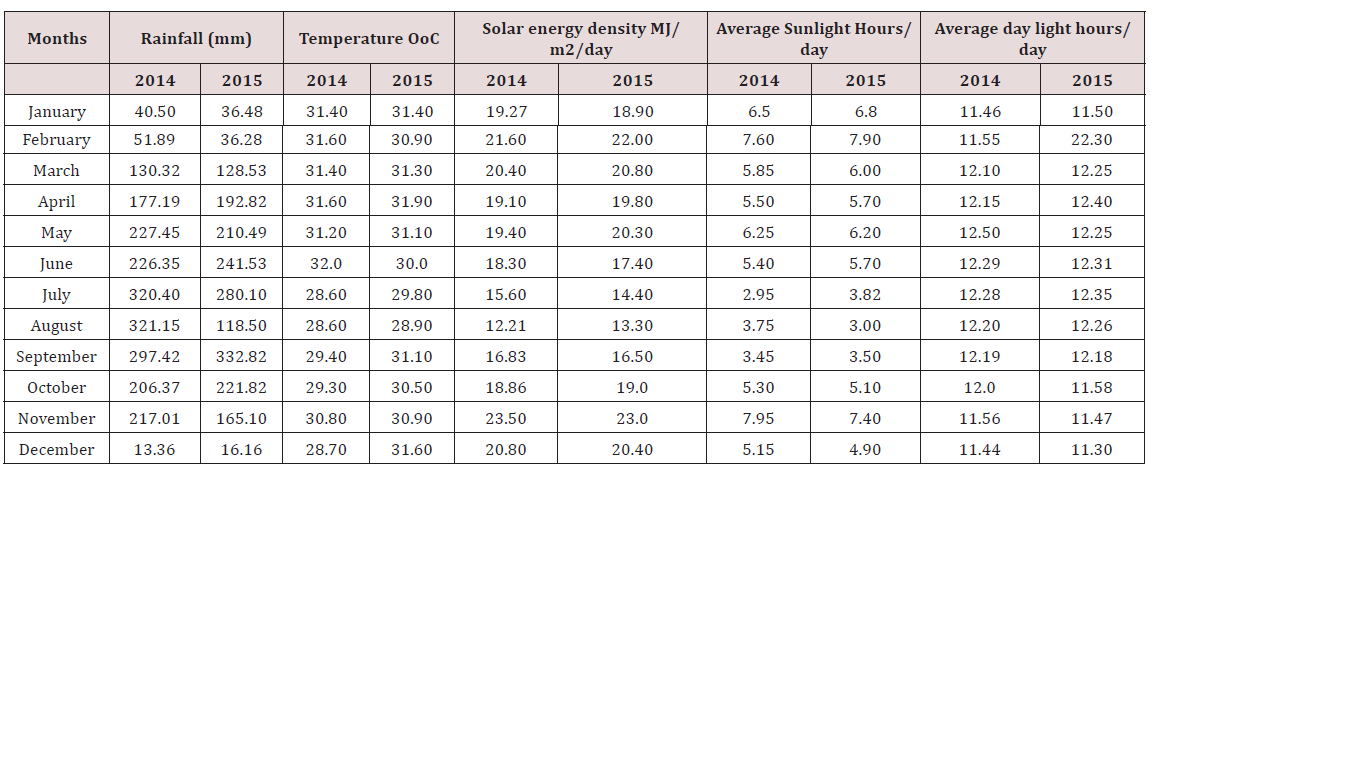
Source: Agro-climatology Department Ondo State Ministry of Agriculture
Pre cropping Soil Sampling and analysis
30 core samples were collected from 0-15cm depth, bulked,
air-dried, sieved with 2mm sieve for routine analysis. Soil P was
extracted by Bray P1 extractant and the extract was developed on
Murphy blue coloration and determined on a spectronic 20 [14].
The soil pH (1:1 soil/water and 1:2 soils/0.01M CaCl2) was read on
pH meter Crockford [15]. The organic matter was determined using
wet oxidation method through chromic acid digestion Walkley [16].
Soil. K, Ca, Mg and Na were extracted with 1M NH4OAC pH7 and
their contents K, Ca and Na were read on the flame photometer [17]
while Mg content was read and determined on atomic absorption
spectrophotometer. The Soil N was determined using the micro
Kjedahl method. Jackson [18] while the micronutrients (Fe, Cu,
Zn and Mn) were extracted with 0.01M HCl and read on atomic
absorption spectrophotometer. Parricle size analysis was carried
out using hydrometer method Bouycous [19].
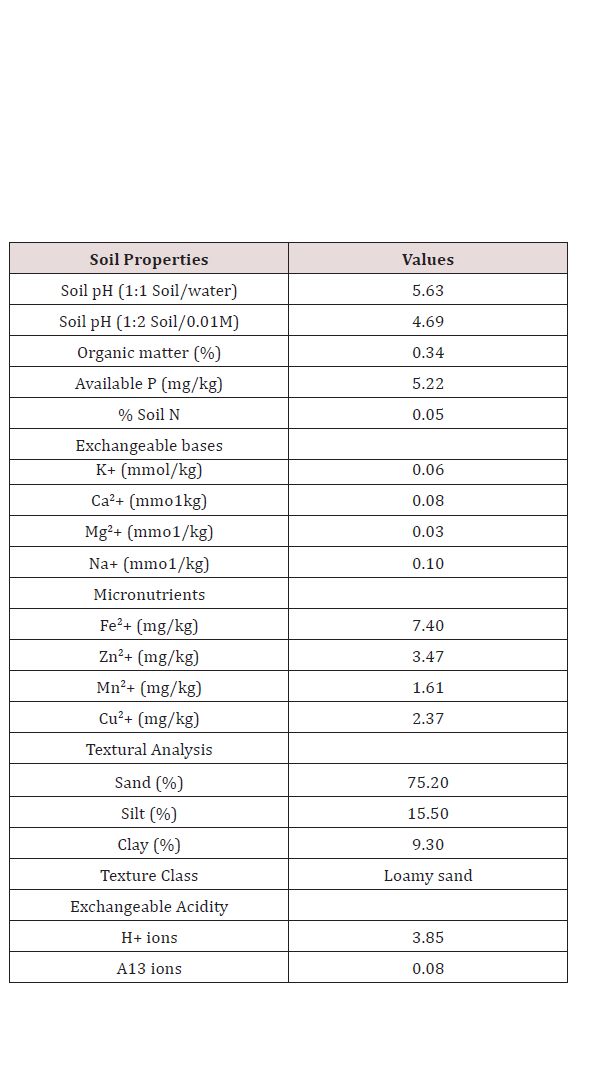
The soil pH 5.63 showed that the soil is slightly acidic. The
soil organic matter 0.34% and soil available P 5.22mg/kg were
far below 3% O.M and 10mg/kg P critical levels recommended for
sustainable crop production in South West Nigeria Agboola [20]. The
soil exchangeable bases (K, Ca, Mg and Na) were below 0.20mmol/
kg recommended critical level in the study area Folorunso [21].
The soil textural class is loamy sand while the micronutrients were
sufficient for crop production; higher than 5.0mg/kg Fe, 3.0mg/
kg Zn, 1.0mg/kg Cu and Mn 1.5mg/kg critical levels respectively
Adeoye [22]. The soil N content of 0.05% was lower than 0.15% N
critical level recommended for crops by Sobulo [23] (Table 2 ).
Table 2: Pre-cropping soil analysis for wheat.
Sources and processing of organic fertilizers used for
the experiment
Poultry, pig and goat manures were obtained from the
10,000 poultry birds, 500 pigs and 500goats in the livestock
unit of Federal College of Agriculture, Akure while the wood ash
was obtained from the large scale cassava processing unit which
processed cassava tubers from 10,000 hectares of cassava farm in
the same institution. NPK 15-15-15 fertilizer was purchased from
Agricultural Development Programme (ADP), Akure Ondo State
while the imported wheat seeds (Durum L) were also purchased
from a certified seed company, Agro-Farm enterprises, Akure
Nigeria. The organic fertilizer materials were processed; wood ash
was sieved with 2mm sieve to remove pebbles and charcoals while
poultry, pig and goat manures were cured before application.
Chemical analysis of the organic fertilizers used
Two (2) grammes each of the processed organic fertilizers
were analysed. P, K, Ca and Mg analysis was done using wet digestion method based on 25-5-5ml of HNO3–H2SO4-HCLO4 acids
while Nitrogen (N) content was determined by the kjedahl method
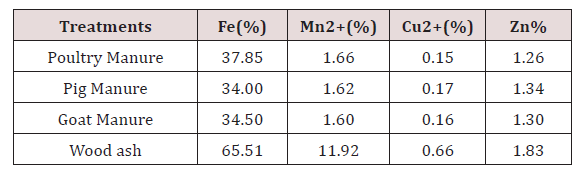
Jackson [18]. Table 3 presents the chemical analysis of the organic
fertilizers used for the research experiment. Poultry manure had
the highest values of N, P and least value of C/N ratio followed by
pig, goat manures and wood ash respectively. The wood ash had
the highest values of %K, Ca, Mg, Fe Mn, Cu and Zn respectively. Its
highest C/N value of 11.76 might delay decomposition and quick
release of nutrients to crops when compared to poultry, pig and
goat manures respectively. The NPK 15-15-15 fertilizer had 15%N,
15%P and 15%K nutrient contents respectively.
Table 3a: Pre-cropping soil analysis for wheat.
Table 3b: Pre-cropping soil analysis for wheat.
Nursery establishment for wheat seedlings
Land clearing with packing of debris where carried out
followed by construction of bamboo made of erected bamboo
poles and covered on the top with moderate spread of palm fronds.
Ten nursery beds with a size of 4mx4m each were prepared. The
wheat seeds (durum L) variety were sown in June manually into
rows spaced at 20cm apart, covered lightly with soil, watered
regularly twice a day (morning and evening time) to aid good
seeds germination and establishment of seedlings. Germination of
wheat seeds occurred four days after planting and seedlings were
nursed for 3 weeks before transplanting. The nursery experiment
is important because direct sowing of wheat seeds on field will not
bring out healthy seedlings with high germination percentage, thus,
the use of shade structure was to control the prevailing temperature
for higher rate of seeds germination to plant on large scale field.
The experimental land was cleared, ploughed, harrowed and
marked into different plots. Each plot size was 5mx5m (5m2). There
were four organic fertilizer treatments, namely wood ash, poultry,
pig and goat manures, applied at 6t/ha with a reference treatment
NPK 15-15-15 fertilizer applied at 3000kg/ha and a control
treatment (no fertilizer application). The experiment was arranged
in a randomized complete block design and replicated four times.
The choice of 6t/ha for wood ash, pig, goat and poultry manure for
this research was based on the research works of Folorunso [24]
and Moyin Jesu [25] on determination of soil critical levels for N,P,K,
Ca and Mg using organic fertilizer materials and concluded that
application of 6t/ha was the best critical level for optimum crop
yield in the study area.
The incorporation of the organic fertilizers into the soil was
done one week before transplanting the wheat seedlings using hand
trowel. Twenty one day old wheat seedlings were transplanted to
the experimental plots at 20cm spacing between rows and 5cm
within rows on July, 2014. After transplanting, watering was carried
out every morning and evening for one week for full establishment
of seedlings. Tillering of wheat seedlings started at 4 weeks after
transplanting. Weeding operation was done manually 14 days
after transplanting and continued at three (3) weeks interval
until harvest. Wheat seedlings were sprayed with Avesthrin
(Cypermethrin 10EC) at 10ml/litre of water at 3 weeks interval
until 9 weeks after transplanting to control leaf defoliating insects
and other pests of wheat.
Wheat growth parameters such as plant height (cm), number of
tillers, number of spikelets, leaf population, stem girth (cm) leaf area
(cm2) and plant population were measured starting from 15 days
after transplanting (DAT) until 70 days after transplanting. The leaf
area was estimated using the non-destructive and accurate method
of Pandey and Singh (2011) based on determination of individual
leaf area using a simple equation leaf area (cm2) =x/y where x is the
weight (g) of the area covered by leaf outline on a millimeter graph
paper and y is the weight of one cm2 of the same graph paper. The
formation of panicles in wheat started between 7–8 weeks after
planting. At 12 weeks after planting, harvesting of matured wheat
panicles at 15% moisture started for each treatment as they attain
maturity, the panicles were cut from the base using knives, weighed
(kg), bagged and sun dried for five days to attain 13% moisture
content. The dried panicles were threshed to remove carefully the
wheat grain yield and weighed per each treatment plot. The weight
of wheat straw and root biomass were also measured to determine
the ratio between the grain yields and shoot weight.
Proximate analysis of wheat grains
2 grammes each of wheat grains per treatment were weighed
into crucibles and placed in a muffled furnace for 6 hours at 450oC.
Thereafter, ash was allowed to cool down, made into solution and
filtered to obtain clear solution through which the crude fibre,nitrogen, crude protein (%N x6.25) and crude ash were determined
as described by AOAC [26].
Post cropping soil analysis
Soil samples were collected after harvesting from each of the
treatment plot, bulk together, air-dried, sieved and analysed for soil
N, P, K, Ca, Mg, pH and O.M as earlier described for pre-cropping soil
analysis.
All data collected on the growth and yield parameters of wheat
were subjected to Analysis of Variance (ANOVA) F-test and their
means were separated using Duncan Multiple Range Test at 5%
level of significance Gomez [27].
The growth parameters of wheat plants under different organic
fertilizer treatments between 15 and 70 days after transplanting
Significant increases (P<0.05) in the wheat plant height, leaf
area,number of tillers, stem girth, number of spikelets/plant and leaf
population under different organic fertilizers compared to the
control treatment (Table 4a & b). The highest values of wheat plant
height, leaf area, number of tillers, stem girth; number of panicles
per plant and leaf population were obtained with the application
of poultry manure followed by NPK 15-15-15 fertilizer, pig, goat
manures and wood ash respectively. When compared with NPK 15-
15-15 fertilizer, poultry manure increased wheat plant height, leaf
area, number of tillers per plant, stem girth and number of panicles
per plant by 14%, 10%, 2%, 11%, 15% respectively except leaf
population where NPK 15-15-15 fertilizer increased the parameter
by 3% more than poultry manure. Pig manure also increased the
plant height, leaf area, and number of tillers, stem girth, number
of panicles and leaf population by 1%, 14%, 33%, 3%, 8% and
23% respectively compared to the goat manure. The wood ash
treatment application increased moderately the values of wheat
growth parameters while the control treatment where there was
no fertilizer application had the least values of growth parameters.
Table 4a:
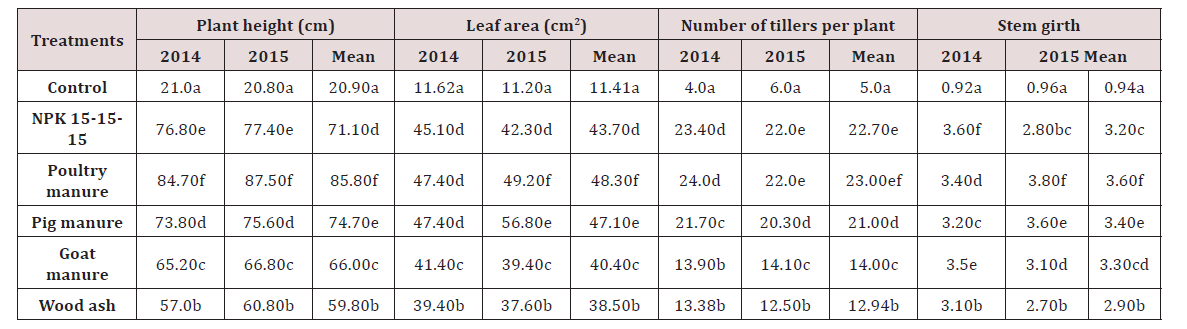
Treatment means within each column followed by the same letters are not significantly different from each other using Duncan
Multiple Range Test at 5% level.
Table 4b : The growth parameters of Wheat under different organic fertilizer treatments.
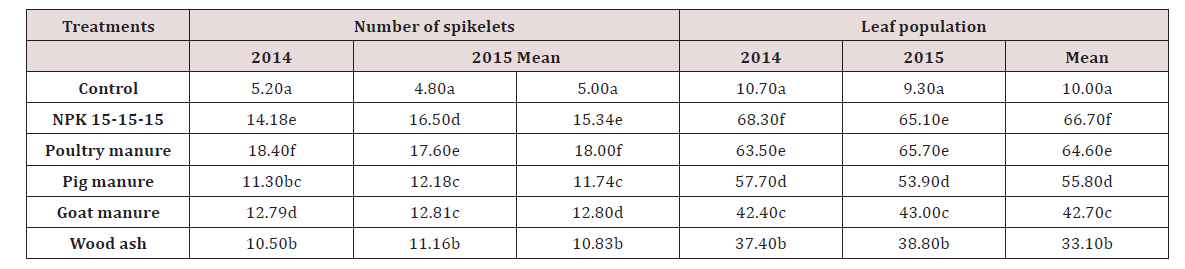
Treatment means within each column followed by the same letters are not significantly different from each other using Duncan
Multiple Range Test at 5% level.
Effect of different organic fertilizers on the yield parameters
of wheat
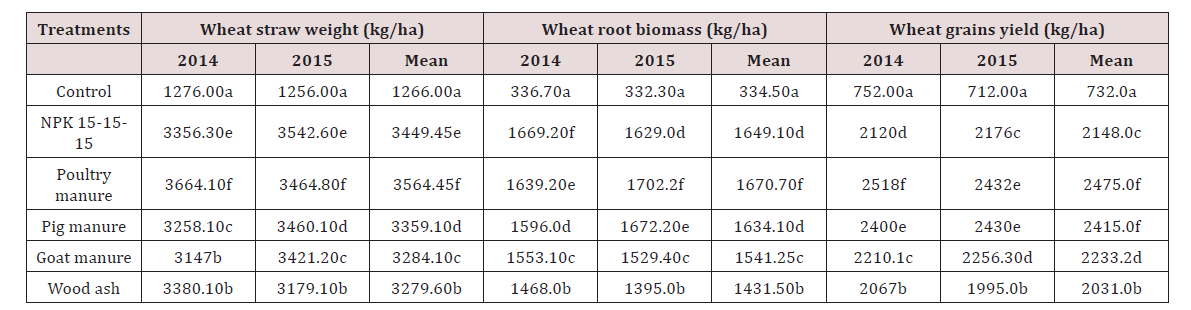
There were significant (P<0.05) increases in the wheat grains
yield (kg/ha), straw weight and root biomass under different
organic fertilizer treatments compared to the control treatments
(Table 5). The highest values of wheat grain yields, straw weight
and root biomass (kg/ha) were recorded with the application
of poultry manure followed by NPK 15-15-15 fertilizer, pig, goat manures
and wood ash respectively. Application of poultry manure
increased the wheat grain yield, straw weight and root biomass by
13%, 2% and 1% compared to NPK 15-15-15 fertilizer. In-addition,
it was observed that the wheat straw yield and root biomass values
in NPK 15-15-15 fertilizer were slightly higher than the pig goat,
manures and wood ash respectively. Pig manure increased wheat
grain yields, straw weight and root biomass by 16%, 2% and 12%
compared to wood ash. The goat manure and wood ash increased
moderately the yield parameters of wheat while the control
treatment where there was no fertilizer application had the least
values of wheat yield parameters. The higher straw yield and root
biomass of wheat in all the treatments also gave an indication of
their potential uses as fodder, hay and silage for animals in the
study area.
Table 5 : The yield parameters of Wheat under different organic fertilizer treatments.
Treatment means within each column followed by the same letters are not significantly different from each other using Duncan
Multiple Range Test at 5% level.
Proximate analysis of wheat grain yield under different
organic fertilizer treatments
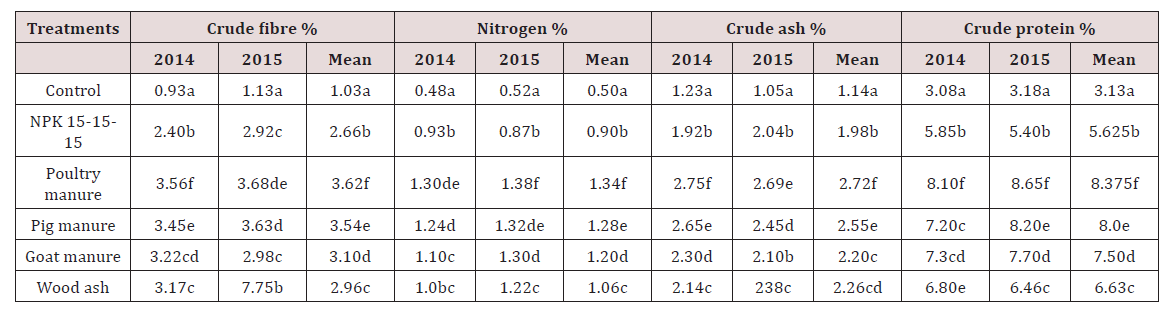
The % crude fibre, %N, % crude protein and % crude ash of
wheat grains increased significantly (P<0.05) under different
organic fertilizer treatment compared to the control treatment
(Table 6). The poultry manure application produced the highest
values of wheat grains crude fibre, %N, % crude protein and crude
ash followed by pig, goat manures, wood ash and NPK 15-15-15
fertilizers. Poultry manure treatment increased the wheat grains %
crude fibre, %N, % crude fibre and crude ash by 27%, 33%, 33%
and 27% respectively compared to NPK 15-15-15 fertilizer. Among
the organic fertilizer treatments, poultry manure had the highest
values of % crude fibre, %N, crude protein and crude ash compared
to pig, goat manures and wood ash. Pig manure increased the %
crude fibre, %N, % crude protein and crude ash by 16%, 17%, 17%
and 11% compared to wood ash while the control treatment with
no fertilizer application had the least values of wheat grains %N,
crude protein, crude ash and fibre.
Table 6 : Proximate analysis of wheat grain yield under different organic fertilizer treatments.
Treatment means within each column followed by the same letters are not significantly different from each other using Duncan
Multiple Range Test at 5% level of significance.
Post-cropping soil chemical composition under different
organic fertilizers after harvesting wheat.
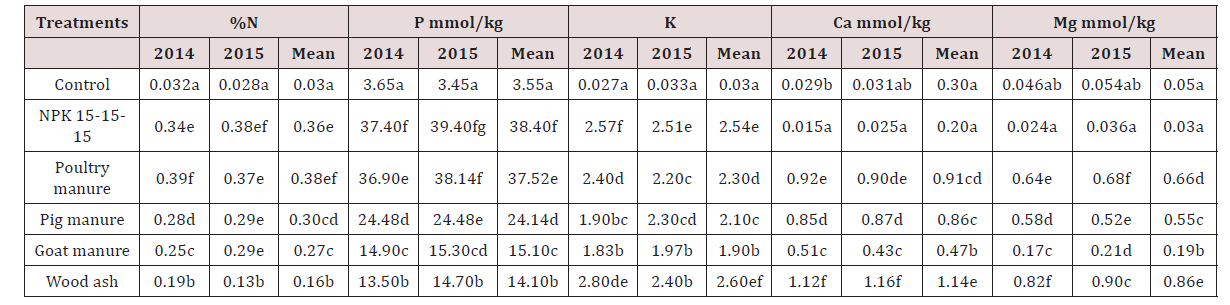
The soil pH, O.M, N, P, K, Ca and Mg increased significantly
(P<0.05) under different organic fertilizer treatments compared
to the control treatment (Table 7a & 7b). Application of poultry
manure increased soil N, Ca, Mg, pH and % O.M by 5%, 98%, 95%,
24% and 90% respectively compared to the NPK 15-15-15 fertilizer.
However, NPK 15-15-15 fertilizers increased slightly the soil P and
K by 2% and 9% respectively compared to the poultry manure. The
NPK 15-15-15 fertilizer also decreased soil pH and O.M. Among the
organic fertilizers, poultry manure treatment produced the highest
values of soil N, P, and O.M closely followed by pig, goat manures and
wood ash treatments. In-addition, wood ash also had the highest
values of the soil K, Ca, Mg and pH compared to others.
Table 7a : Proximate analysis of wheat grain yield under different organic fertilizer treatments.
Treatment means within each column followed by the same letters are
not significantly different from each other using Duncan Multiple
Range Test at 5% level.
Table 7b : Soil Chemical Composition after harvesting wheat under different organic fertilizers.

Treatment means within each column followed by the same letters are not significantly different from each other using Duncan
Multiple Range Test at 5% level.
Poultry manure treatment increased the soil N, P and O.M by
30%, 60% abd 20% compared with goat manure while wood ash
treatment increased the soil K, Ca, Mg and pH by 11%, 20%, 23%
and 4% respectively compared to the poultry manure treatment.
The values of soil K/Ca, K/Mg and P/Mg ratios in NPK 15-15-15
fertilizer treatment were 127:1, 85:1 and 1280:1 respectively
compared to K/Ca (3:1), K/Mg (4:1) and P/Mg (57:1) ratios in
poultry manure treatment. The control treatment where there was
no fertilizer application had the least values of soil N, P, K, Ca, Mg,
Soil O.M and pH.
The control treatment had the least values of growth, yield
parameters, proximate analysis of wheat and soil properties after
harvest and this was due to low soil nutrient status before planting,
hence, there is need to incorporate fertilizers to the soil to improve
the performance of these growth, yield and soil parameters in
wheat. This was in line with Moyin [28] who reported that organic
fertilizers applied at 6t/ha increased the soil and leaf, N, P, K, Ca
and Mg concentrations which resulted into an increase in soil
pH, O.M content and growth parameters of Coconut seedlings.
Similarly, Maqsood [29] reported that the cereal grains and stover
yields increased by 37% and 49% respectively when fertilizers
were incorporated compared to when there was no fertilizer
application. The significant increases in wheat plant height,
number of tillers per plant, number of spikelets/plant, leaf area
stem girth, straw yield, root biomass and grain yields obtained
with the application of poultry manure compared to others might
be due to its rich and balanced nutrients (N,P,K,Ca,Mg ) and least
C/N ratio which were made available to wheat crop very quickly for
uptake and sustainable performance. This result agreed with the
findings of Jubril who reported that higher number of wheat tillers
obtained with 7.5t/ha of poultry manure might be attributed to
the more readily available nitrogen which played a vital role in cell
division. In-addition, Abdul [11] also reported that wheat has high
requirement for nitrogen (N), potassium (k), phosphorus (P), Zinc
and sulphur. The deficiency of nitrogen either organic or inorganic
forms to wheat will lead to stunted growth and low yield.
Parveen [30] also reported that nitrogen significantly affected
the plant height, fertile tillers, number of spikelets, 1000 grain
weight and grain yields of wheat. This was because nitrogen played
an important role in plant metabolism which increased better
seed development, seed maturity and grain production in wheat.
The average grain yield of wheat obtained with the application of
poultry and pig manures in this experiment compared favorably
with the world average of 3010 Kgha-1 and China (4710kgha-
1) as reported by Abdul [11]. It is believed that planting of new
high yielding wheat varieties adapted to the new environment
will increase the average yield per hectare in the study area.
Phosphorus is important as component of Ribulose 1,5 phosphate
and phospho-glyceric acids in photosynthesis (ATP). Therefore,wheat is a C3 plant which makes use of sunlight to photosynthesize
and produce phosphorus based product that subsequently led to
higher grain yields. This observation was supported by Getachew
[31]. who reported significant responses of wheat to phosphorus on
nitosols in the Central Ethopian highlands. Besides, the prevailing
temperature, rainfall amount and insolation hours (sunshine
hours) in the study area (Table 1) might also be responsible for the
good photosynthetic process and the yields of wheat even without
irrigation as practiced in Northern Nigeria and other countries with
low rainfall. Hence sustainable increases in wheat yields, depend
on adequate level of water and nutrients.
The ratio of straw yield and root biomass to the grain yields
of wheat in this experiment was very comparable to the ratio
2:1 obtained by Wang [32]. The straw yields and root biomass
are potential sources of fodder and hays for the small and large
ruminant animals (goats, sheep and cattle) as part of wheat value
chain which is yet to be explored. Besides, the availability of these
fodder and hays from wheat will reduce drastically the frequent
conflicts between the farmers and normadic herdsmen in the
study area and other regions of the world. The root biomass will
enhance stability of the soils against erosion which can deplete
soil nutrients; also, it will help to stabilize the wheat plants against
lodging. This observation was supported by Fischer and Stapper
[33] who reported that the use of organic manures reduces soil bulk
density which promoted vigorous rooting in wheat and confers
stability to the crops against wind attack and reduced lodging.
Lodging in cereals also leads to significant reduction in the stover
and grain yields. It was also observed that the high nitrogen content
in NPK 15-15-15 fertilizer might be responsible for the excessive
vegetative growth in wheat plants (i.e luxury consumption) which
delayed maturity and subsequently the reduced yields of wheat
compared to poultry manure. Besides, the application of NPK 15-
15-15 fertilizer at 300kg/ha led to nutrient imbalance as shown
in the high soil K/Ca, K/Mg and P/Mg ratios which made nutrient
availability difficult and the uptake of P, K, Ca, and Mg. This could
also be responsible for the lower wheat grains yield, tillers, number
of spikelets, root biomass and so forth. The above observation
agreed with Moyin [34] who reported that continuous use of
NPK 15-15-15 fertilizers and other chemical fertilizers promoted
decline in soil organic matter, decrease uptake of K, Ca and Mg as
well as increasing soil acidity. Increase acidity (low pH) significantly
affected soil microbes activities (pseudosomonas, nitrosomonas
and nitrobactor) which played active part in nitrogen cycle supply
of nitrogen to the soils for crop use as reported by Odu [35].
Moyin [25] also reported that interactions of soil K/Ca, K/Mg
and P/Mg in NPK fertilized soils will lead to nutrient dilution and
could be responsible for the lower quality indices of wheat grain
yield (crude fibre, crude ash, nitrogen and crude protein). Besides,
Maqsood [29] reported excessive uptake of nitrogen would lead to
luxury consumption and prolonged maturity leading to Nitrogen
–phosphorus interaction in NPK 15-15-15 fertilizer application.
The ultimate end is nutrient dilution and low yields of wheat.
Nevertheless, this type N/P interaction was not noticed in the
experiment conducted by Parven [30] using organic manures. The
NPK fertilizers contained mainly N, P and K and very low traces
of Ca and Mg. Tong [36] reported that excess nitrogen in chemical
fertilizers might be leached downwards to pollute underground
water. Calcium (Ca) has been reported to increase the root biomass
which subsequently increased the nutrient uptake by wheat
plants for high grain yields while Mg is also important in the
formation of chlorophyll with nitrogen. This will encourage higher
photosynthesis rate culminating into formation of high number
of wheat tillers number of spikelets and grain yield as noticed in
the poultry, pig, goat manures and wood ash fertilized plots in the
experiment. The above observation was supported by Craighead
and Martin [37] who reported that there was a significant increase
in wheat grain yield, tillers and spikelets to Magnesium (Mg)
fertilizer application.
Wood ash application to soils increased most the soil pH and
this could be due to its having the highest values of K, Ca and Mg
(exchangeable bases) which subsequently increased the soil
buffering capacity and base saturation as observed by Moyin
[29]. Besides, Obatolu [38] also reported that soil pH influenced
nutrient availability and uptake of nutrients by crops. Potassium
is important in wheat grains filling and formation, strengthening
of plant stems, opening and closing of stomata and cell division
for higher photosynthetic rate. This could be responsible for the
better grain yield, number of tillers and spikelets of wheat in wood
ash fertilizer treatment. This observation was also supported by
Adu Daap [39] who reported that cocoa pod ash and wood ash
increased the availability and uptake of soil K, Ca and Mg nutrients
in soils. Owureke [40] reported that potassium is important in
water conservation, enhancing flowering, fruit maturity and yield
of crops particularly in pineapple. However, the highest C/N ratio
of wood as compared to that of poultry and pig manures could
hamper decomposition and reduced the release and uptake of
nutrients. This could be responsible for the lower wheat grain
yield, root biomass and growth parameters in wood ash fertilized
plots. The processing of the organic fertilizers in this study helped
to reduce their C/N ratios and the results obtained would have
been extremely different if unprocessed organic fertilizers were
used. Adebayo [41] reported that the C/N ratio of unprocessed saw
dust and wood ash were 135:1 and 130:1 respectively, hence, the
need for processing of organic fertilizers to reduce C/N ratio. The
tillage practices such as ploughing and harrowing employed in this
research were also important in the establishment of transplanted
wheat seedlings in the field. The soils tilth was improved which
made the seedlings to root easily and this reflected in the increased
number of tillers, spikelets and grain yield of wheat as observed
by Moyin [42] who reported that tillage practices significantly
improved the establishment and yield of cabbage. Besides, the
application of organic fertilizers such as wood ash, pig, goat and
poultry manures reduced the soil bulk density and increased soil
porosity as observed by Moyin [43] who reported that wood ash
and the amended forms with poultry reduced significantly the soil
bulk density and subsequently improved root development.
One of the major significant contributions of this study was
the raising of wheat seedlings in the shaded nursery for full
establishment in the field after transplanting. Direct sowing of
wheat seeds in the field did not have good germination because
of direct impact of weather (temperature and water stress). This
observation was in line with the work of John [44] who reported
that high temperature >35.4C and water stress were inimical to the
growth of wheat at leaf initiation stage, shoot growth, vernalisation,
terminal spikelets, anthesis and grain filling. The crude ash,
nitrogen, protein and crude fiber contents of wheat grains in this
study were very comparable and adequate when compared with
1.17 -2.96% crude ash, 8.3 -19.3% protein and 1:11–2% crude
fiber obtained by Davis [45] indicating that the application of
poultry manure, pig, goat and wood ash fertilizers increased the
quality indices of wheat. Therefore, the significant improvement
in crude fiber, ash and protein of wheat could be linked to the
nutrient compositions of pig, poultry, goat and wood ash which
translated to ensuring high quality indices. This observation was
supported by Zuzana [46] and Davis [47] who reported that grains
quality content such as carbohydrate, protein, minerals, crude
fibre and ash were derived from crops when consumed by people.
The intake of these nutrients would enhance sound health and
productivity which would reduce the amount of money expended
in buying synthetic drugs and supplements. Crude ash and crude
fiber are reported to have beneficial effects in protection against
heart disease, cancer, normalization of blood lipids, regulation of
glucose absorption and prevention of constipation while protein
is responsible for the body development and growth Flagella [48].
In-addition, another significance of this research work is that
the successful domestication of wheat in South West Nigeria has
opened wide opportunities in wheat value chains by providing raw
materials for establishment of more confectioneries enterprises
(baking breads, biscuits, cakes, cookies, pasta and noddles) which
will bring more income for farmers and reduced the increasing rate
of unemployment programmes.
This success could be replicated in all the Southern areas of
West Africa (Benin, Togo, Ghana, Cote d’voure, Gambia, Liberia,
Sierra Leone, Senegal and Gambia) and other regions in the world
with similar climatic conditions. Furthermore, the domestication of
wheat in South West Nigeria under rainfed agriculture in the second
cropping season (July–Nov) has reduced significantly the cost of
irrigation as being practiced in the Northern region of Nigeria, drier
parts of Asian countries (Iran, Iraq, Syria etc) and African countries.
The increasing effects of climate change in reducing the volume of
irrigated water in dams coupled with extreme high temperature
and low rainfall amount in the Northern parts of Nigeria and other
drier regions in the world for wheat cultivation had created a
serious threat to wheat production in the world, thus, increasing
the wide gap of supply and demand for the crop. Flagella [49]
reported that water stress adversely affected plant establishment,
growth and cell development. It also diminishes photosynthesis
and affect grain yield at milking and filling stage in wheat. However,
it is suggested that further research studies should be carried out
to develop more high yielding varieties of wheat that are adaptable
to the climatic fluctuations, drought, pest and diseases resistance
in Nigeria and other countries in the world willing to domesticate
wheat cultivation on commercial basis.
The research work has shown vividly that the use of different
forms of organic fertilizers namely pig, poultry, goat manures
and wood ash applied at 6t/ha significantly increased the wheat
growth, grain yield parameters, crude fibre, crude ash, protein,
nitrogen qualities, soil pH, organic matter, N.P,K, Ca and Mg.
Hence, it is recommended that poultry manure be applied at 6t/
ha to increase availability of essential soil nutrients, growth, grain
yield parameters, crude ash, crude fibre, and nitrogen and protein
qualities of wheat which would enhance sustainable production
of wheat on commercial basis. In-addition, if there is scarcity of
poultry manure in your environment, pig manure is also a good
alternative to it in term of performance. Besides, the use of poultry
manure would substitute for application of high quantity of NPK15-
15-15 fertilizer. This recommendation is very essential because the
purchase of inorganic fertilizers by small scale and commercial
farmers of wheat is very expensive/exorbitant. Also, the benefits
of secondary/residual effects of these organic fertilizers on
soil fertility improvement and enhancing sustainability of the
environment must be considered as important