Showing posts with label Agricultural sciences open access journal;. Show all posts

Saturday, July 3, 2021

Lupine Publishers | Evaluating the Impacts of Development on Agricultural Land

  Lupine Publishers |Agriculture Open Access Journal


Mini Review

In developing nations like the Kurdistan region in Iraq, experience shows that, during the initial phases of development, urban expansion becomes a top priority and as a consequence agricultural land is often considered as a set aside for forthcoming urban expansion. Hence, agricultural lands are at risk due to the loss of land to urbanization. The Kurdistan region in Iraq is highly suited for agriculture as it boasts significant areas of arable land, fertile soil and various micro-climatic zones [1,2]. Potentially, agriculture in the Region could become an important public revenue and the rehabilitation of this sector translates into reviving village life, creating more job opportunities, encouraging new industries, and upgrading the standard of living and quality of life [3,4]. Agriculture in the region is characterized by its low productivity due to a number of reasons which include using outdated farming practices, not matching agricultural produce with the best fitting environmental conditions. An added factor can also be the loss of prime productive land to urbanization. This note assesses the influences of urban expansion, on wasting arable land and the ultimate consequence on sustainable agricultural production in the Kurdistan region, Iraq.

A practical way forward for increasing agricultural productivity is through land capability and suitability mapping, which spatially and temporally summarizes the extent to which the inherent physical capacity of the land and the associated favorable climatic conditions in a particular area is agricultural production without reducing the soil’s long-term productivity, subject to good management Dent and Young, 1981; Emery, 1986. Hence, land capability and suitability classification are a specific grouping of soils made primarily for agricultural purposes.

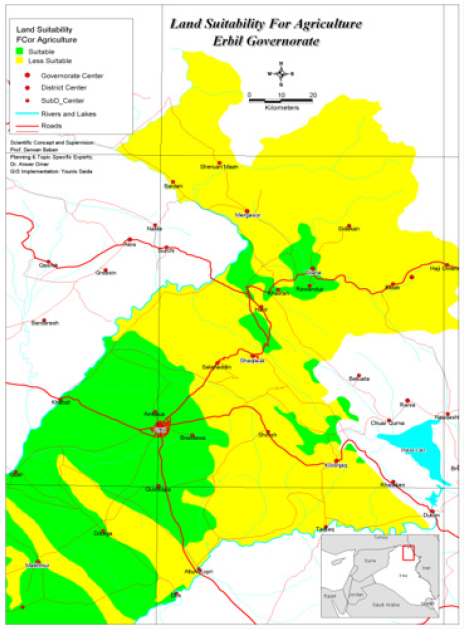
The suitability of land for plant production in Iraq was developed based on the Soil Survey Geographic Database (SSURGO) which rates soils based on their ability to support cultivation and farming of common crops without deterioration of the soil over long periods of time. It contained 8 classes ranging from the soils with the potential for agricultural production (class I) to areas not capable of agricultural production such as rock outcrops and sandy heath (class VIII). Under good management, soils in classes from I-IV are capable of producing common cultivated field crops, pasture plants, range plants, and forest trees without reducing the soils long-term capacity. Using the suitability of land for plant productions for Iraq, a new GIS based Land capacity and suitability map was produced for the Erbil governorate and provinces. This binary map was developed based on clustering the 8 classes into two classes. The first soil classes ranked from 1-4 are considered as “Suitable”, while the other classes were considered “Less Suitable” (Figure 1). The map shows that the main urban centers are located on the most suitable land for agriculture as the community is agricultural in nature.

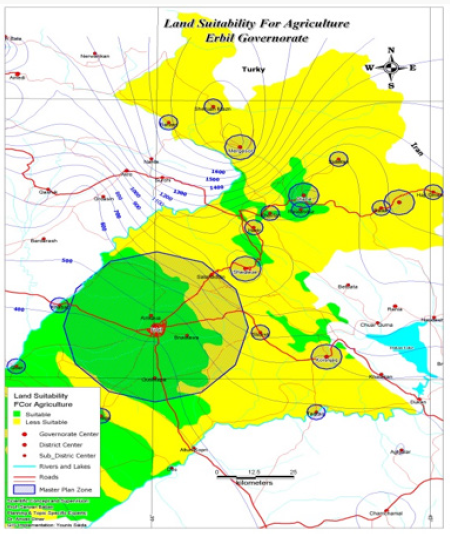
The outcome was then correlated with recently developed Master plans for Erbil governorate and provinces. Using this information, a GIS based map was produced (Figure 2). The results disclosed the estimated loss in productive agricultural land when the current Master plans are implemented, making the estimated loss in Erbil governorates to be around 1514Km². Therefore, under current practice, urban expansion can only be implemented through wasting valuable productive agricultural land. Clearly, the paradox is that as the population grows, the need for urban expansion grows, and the latter can only be carried out by wasting productive agricultural land and endangering sustainable agriculture. This suggests the need revise to the Master plan and to find a healthy balance between development and sufficient food production for the current as well as the growing population. Furthermore, the outcomes can provide the necessary information on the broad agricultural products most physically suited to an area, that is, the uses with the best match between the physical requirements of the use and the physical qualities of the land. Consequently, it can provide guidance on the inputs and planning requirements associated with different management schemes for increasing agricultural production within the region.

Figure 1: The spatial distribution of suitable land for agriculture in Erbil Governorate in Kurdistan Region, Iraq.

Lupinepublishers-openaccess-Agriculture

Figure 2: The impacts of Master plans on squandering land in Erbil.

Lupinepublishers-openaccess-Agriculture

Saturday, June 26, 2021

Lupine Publishers | Influence of Inoculation Methods of Rhizobial Strains Having ACC-Deaminaze Activity on Growth and Yield of Rice Crop Under Salt-Affected Field

  Lupine Publishers |Agriculture Open Access Journal


Abstract

A field experiment was conducted at Soil Salinity Research Institute, Pindi Bhattian, experimental farm to evaluate different Rhizobial inoculation methods on growth and yield of rice (Oryza sativa) cv. Basmati-385 under natural salt-affected soil (pH= 8.55, ECe= 5.32 dSm-1 and SAR=25.46) during 2015-16. Seeds of rice were inoculated with four rhizobial strains (RPR-32, RPR-33, MW- 20 (PSB) and SBCC (M8) in three ways i.e. rice seeds inoculated for direct seeding and nursery and dipping seedling roots in the solutions of these rhizobial strains. Maximum tillering was observed with all strains under different inoculation methods. Although, the strains performed better as compared to control, however, dipping of nursery roots produced significantly higher yield followed by seed inoculation for direct seeding. Overall, among all the rhizobial strains, MW-20 (PSB) and SBCC (M8) produced comparable paddy yield. The highest paddy yield (291gm-2) was harvested with SBCC (M8) seed inoculation which was 19% more than that of un-inoculated (control).

Keywords: Rhizobial strains (RPR-32, RPR-33, MW-20 (PSB) and SBCC); Rice; Number of tillers and Paddy yield

Introduction

Rice is a grain crop for feeding more than half of the world population [1]. The entire form of life is reliant on plants as they produce oxygen and form the staple food for humans and animals. According to report, 98% of the world’s food necessities are fulfilled by 12 plant species and 14 animal species. Above 50% of the world energy ingestion is met by crops such as wheat, rice and maize [2]. Soil salinity is one of the chief abiotic factors affecting soil microbial activities and crop productivity. Reports showed that over 20% of agricultural land internationally is affected by salt [3]. It is estimated that the salinization will cause the loss of 50% arability of agricultural land by the middle of the 21st century [4]. Saline soil adversely retards the plant growth and productivity by shifting the normal metabolism of plants. Mitigation of salinity stress by plant growth promoting rhizobacteria plants. One of the effects of salt stress is an increase in the band of 1-aminocyclopropane-1- carboxylic acid (ACC), a precursor of ethylene, which consequences in accretion of ethylene. Increase in the rank of ethylene away from a threshold level is termed ‘stress ethylene’, which minimizes plant growth [5] and alters photosynthesis and photosynthetic components [6]. Besides salt stress, other stresses such as flood, drought, wounding, pathogen attack, temperature stress, and mechanical stress also contribute to considerable rise in the level of endogenous ‘stress ethylene [7].

Bio-fertilizers are defined as biologically active products or microbial inoculants of bacteria, algae and fungi (separately or in combination), which possess the innate ability either to fix or mobilize important nutrient elements from non-usable forms through biological process. Bio-fertilizers also include organic fertilizers (manure, etc.), which are rendered in an available form due to the interaction of micro-organisms or due to their association with plants. They need to be applied to soil to enhance microbial activity in the rhizosphere playing a significant role in integrated plant nutrient systems [8]. Excessive and imbalanced use of chemical fertilizers has adversely affected the soil causing decrease in organic carbon, reduction in microbial flora of soil, increasing acidity and alkalinity and hardening of soil. Moreover, excessive use of nitrogenous fertilizer is contaminating water bodies’ thus affecting aquatic fauna and causing health hazards for human beings and animals. Hence world is shifting gradually to replace chemical fertilizers with Bio-fertilizers. Bio-fertilizers are organisms that enrich the nutrient quality of soil [9]. For many farmers, BNF is, therefore, an essential, cost effective alternative or complementary solution to industrially manufactured N fertilizers for staple cereal crops [10,11] reported that calcium and phosphorus were limiting factors for BNF under acidic soil conditions.

In Pakistan, phosphorus in soil is generally quite abundant but it reacts readily with iron, aluminum and calcium to form insoluble compounds. These reactions result in very low phosphorus availability and low efficiency of phosphorus fertilizer used by the plants [12]. The outcome of PGPR on agricultural crops has been investigated and published by various scientists during the last two decades [13-17]. The capability of these strains for improving plant growth was tested in agriculture by using bacterial inoculation in greenhouse as well as under natural field conditions [18-20]. Ethylene is a simple, two-carbon, unsaturated hydrocarbon which is a potent regulator of plant growth and progress [21]. Initially, ethylene was known as a ripening hormone, but later demanding studies, tied with the advent of highly sophisticated analytical techniques, like gas chromatography, unveiled its role in growth and development all over the life cycle of the plant. Because of its varied and effectual role in plant growth and development, ethylene virtues equal category with other classes of plant hormones [22]. Therefore, a field experiment was conducted at Soil Salinity Research Institute, Pindi Bhattian, experimental farm to evaluate different Rhizobial inoculation methods on growth and yield of rice (Oryza sativa) cv. Basmati-385 under natural salt-affected soil.

Materials and Methods

A field experiment was conducted at Soil Salinity Research Institute, Pindi Bhattian, experimental farm to evaluate different Rhizobial inoculation methods on growth and yield of rice (Oryza sativa) cv. Basmati-385 under natural salt-affected soil (pH= 8.55, ECe= 5.32 dS m-1 and SAR=25.46) during 2015-16. Seeds of rice were inoculated with four rhizobial strains (RPR-32, RPR-33, MW- 20 (PSB) and SBCC (M8) in three ways i.e. rice seeds inoculated for direct seeding and nursery and dipping seedling roots in the solutions of these rhizobial strains. Randomized complete block design was applied with three replications. The data obtained were subjected to statistical analysis using the STATISTIX statistical software (Version 8.1) and the mean values were compared using least significant difference (LSD) [23].

Results and Discussion

Table 1: Effect of inoculation methods of Rhizobial strains having ACC-Deaminaze activity on growth (plant Height, panicle length and number of tillers) of rice crop under saline environment.

Lupinepublishers-openaccess-Agriculture

Values followed by same letter(s) are statistically similar at P=0.05 level of significance.

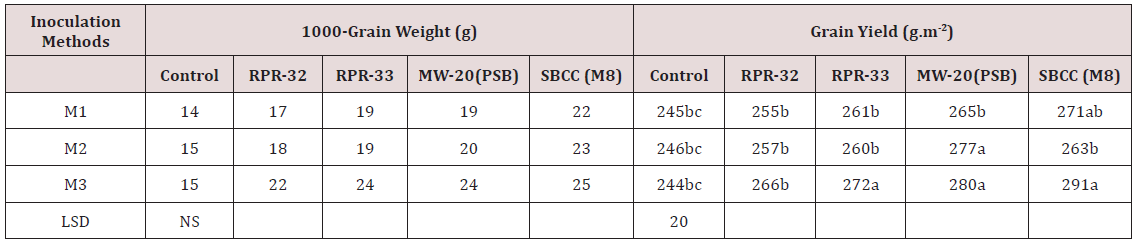
Growth parameters (plant height, panicle length and tillering) data was represented in Table 1. Plant height and panicle length showed non- significant results among three inoculation methods. However, all the inoculation methods exhibited better performance than control i.e. without-inoculation.MW-20(PSB) attained the highest plant height (117cm) in seedling root dipping inoculation methods. Similar trend was also predicted in panicle length. Significant results were indicated regarding tillering of the rice plants. SBCC (M8) rhizobial got maximum number of tillers m-2 (245) among other rhizobial strains, Seedling root dipping technique was the best inoculation method than other two methods. Maximum tillering was observed with all strains under different inoculation methods [24] investigated that biozote significantly affected on germination, root length, fresh weight and dry weight in all mung bean varieties [25] concludes that growth of maize plants behaves better under saline environment as inoculated with different rhizobial strain showing ACC Deaminaze activity due to the production of ethylene under stressed conditions. Reduction in sodium uptake by the utilization of different rhizobial strains under saline environment is a positive sign to induce salt tolerance biologically. Data regarding 1000- grain weight and grain yield indicated in Table 2 Non- significant results were attained in 1000- grain weight among inoculation methods as well as rhizobial strains. But three inoculation methods performed better than control. SBCC (M8) rhizobial strain produced the highest 1000- grin weight (25g) among other strains under seedling root dipping inoculation method [26] resulted that growth of wheat plants performed better under saline environment as inoculated with different rhizobial strains due to the production of ethylene under stressed conditions.

Table 2: Effect of inoculation methods of Rhizobial strains having ACC-Deaminaze activity on1000- grain weight and yield of rice crop under saline environment.

Lupinepublishers-openaccess-Agriculture

M1 = Seed Inoculation for DSR M2 = Nursery Seed Inoculation M3 = Seedling Root Dipping Values followed by same letter(s) are statistically similar at P=0.05 level of significance.

Although, the strains performed better as compared to control, however, dipping of nursery roots produced significantly higher yield followed by seed inoculation for direct seeding. Overall, among all the rhizobial strains, MW-20 (PSB) and SBCC (M8) produced comparable paddy yield. The highest paddy yield (291gm-2) was harvested with SBCC (M8) seed inoculation which was 19% more than that of un-inoculated (control) [27] reported the reduction in sodium uptake by the utilization of different rhizobial strains having ACC deaminaze activity under saline environment is an encouraging sign to induce salt tolerance naturally and reduce the toxic effects of utilization of chemicals for reclamation of salt – affected lands.

Conclusion

This study concluded that maximum tillering was observed with all strains under different inoculation methods. Although, the strains performed better as compared to control, however, dipping of nursery roots produced significantly higher yield followed by seed inoculation for direct seeding. Overall, among all the rhizobial strains, MW-20 (PSB) and SBCC (M8) produced comparable paddy yield. The highest paddy yield (291gm-2) was harvested with SBCC (M8) seed inoculation which was 19% more than that of uninoculated (control).

For more Lupine Publishers Publons Click on Below link


Monday, May 17, 2021

Lupine Publishers | Performance of West African Dwarf (Wad) Goats Fed Dietary Levels of Boiled Rubber Seed Meal (Hevea Brasiliensis)

 Lupine Publishers |Agriculture Open Access Journal


Abstract

Effect of boiled rubber seed meal (BRSM) based diets on the performance of West African Dwarf (WAD) bucks was investigated. Four groups of WADS were randomly fed with the 4 experimental diets (A–D) formulated to contain 0, 10, 20 and 30% BRSM. The experiment lasted for 56 days. Average daily feed intake (g) were 417.90; 428.93; 322.00 and 288.10 for diets A, B, C, D, and the corresponding average daily weight gain was 31.69, 53.92, 46.62, and 34.64 respectively. Feed/gain ratio was 6.90 for goats fed diet C and 7.95 for those fed with diet B. Feed cost per Kg weight gain was N 115.29 for diet C and N 120.42 for diet B. The warm carcass and dressing % were insignificant among the 4 treatment groups, but goats fed diet C showed superiority. Legs, shoulder, sets and bone to lean ratio differed significantly between the treatment groups.

Keywords: Conventional; Non-Conventional; Rubber Seed; West African Dwarf Goats

Introduction

The economic depression of nations has greatly reduced meat availability, and the inadequacy of meat supply has been aggravated by a combination of environment, feed and management factors Wikipedia, [1], Udo [2]. In recent years many categories of Nigerian farmers tend to invest in ruminant livestock farming Hoffmann [3] yet cost of conventional feeds still posed big challenge Hassan [4]. Feed as reported by Akpodiete and Inoni [5], accounts for 60 – 70% of total cost of livestock production and that it’s inadequacy in quality and quantity could lead to a situation of low nutritional status, poor weight gain, poor reproductive ability, poor production, poor health condition and poor conversion ratio Fajemisin [6]. It therefore, becomes important to supply adequate feed in quantity and quality for optimal performance by livestock. Goats’ farming offers ample opportunity for meat inclement and availability. They are easy to keep, require smaller capital investment, play significant role in socio-economic life of the people as they contribute about 35% Nigerian meat supply Oloche [7], and provides income to farmers Peacock [8]. West African dwarf goats are the prevalent and trypono-tolerant breed in the derived and guinea savannah zones Eroarome [9], Udo [10]. But it is worrisome that lack of government legislation for the multiplication of this hardy breed, nutritional constraint particularly during the dry season coupled with the extensive mode of production posed serious problem to their production in the tropic Ahamefule [11] and Ahamefule and Udo [12]. To address the nutritional need of goats, it is therefore, important to supplement their diet with concentrate. As a result of high cost conventional feedstuff and in attempt to reduce competition between man and livestock, nutritionists are in search for alternative non-conventional feedstuff that are cheap and readily available Ahamefule and Udo [12]. There are huge naturally occurring non-conventional feedstuffs that can profitably be used to stimulate small ruminant production Udo [2], Udo [10]. Prominent among them is rubber seed which has no feed value for human Udo [10]. The Humid tropics has large acreage of rubber plantation, and in Nigeria it is cultivated on estimated 185,000 hectares with seed collection of about 10,175 tonnes/year Udo [2], with crude protein content range of 21 – 28%, Crude fibre range of 4.47 – 8% (Udo [2], Udo [10], Njwe [13] and energy range of 2.32 – 2.58 MJ/Kg Udo [2]. Several works on rubber seed have been reported for some breeds animal: pigs Babatunde [14], poultry Nouke and Endeley, 2001, sheep Njwe [13]; but there is paucity of information on the feeding of rubber seed to West African Dwarf Goats. This work however, was designed to evaluate the performance of West African dwarf goat fed dietary levels of rubber seed meal based diet.

Materials and Methods

Experimental Site

The study was conducted at the Goat unit of the Teaching and Research farm, Akwa Ibom State University, Obio Akpa campus, Akwa Ibom State, Nigeria. Obio Akpa is located between longitudes 7° 27’ E and 7° 58’ E. It is located within 3500 – 5000mm annual rainfall with average monthly temperature of 25 °C

Animal Management

Sixteen (16) weaners West African Dwarf (WAD) bucks of 6-7 months old were procured from farmers in the University environment and used for the investigation. On the fifth day of arrival, these animals were all dewormed using albendazole thiabendazole. They were subsequently given acaricide birth using asuntol solution and after that quarantined for 21 days and fed forage and supplements of the test diet for acclimatization. They were vaccinated against Pestes des petite ruminant (PPR) using Rinder pest Tissue culture vaccine. The goats were randomly divided into four groups of four goats per treatment and housed individually in well ventilated cement floored pens equipped with feeders and drinkers.

Experimental Design/Procedures

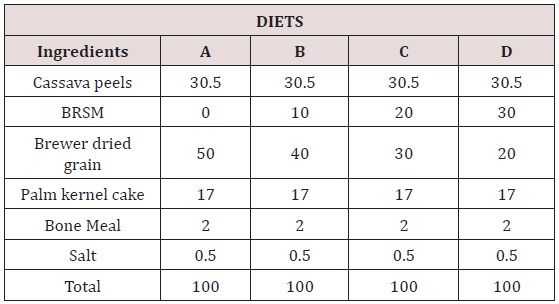
Four diets were formulated to contain 0 – 30% boiled rubber seed meal (BRSM) and designated as A, B, C and D. These diets were assigned randomly to the four animal groups in a completely randomised design. Each goat received 1kg of designated diet in addition to 2Kg of guinea grass (Panicum maximum). Daily feed intake was determined by subtracting daily feed refusal from the 1kg given the previous day. These were used to calculate the average daily feed intake, average daily weight gain feed conversion ratio, and feed economics of production for each treatment group.

Experimental Diets

Four (4) experimental diets (A-D) were formulated to contain various inclusion levels (0-30%) of boiled rubber seed meal (BRSM) with other conventional ingredients as shown in (Table 1).

Processing of Rubber Seed

Twenty (20) kilogrammes of raw rubber seeds were introduced into cooking pot (in batches) whose water has attained boiling temperature (100 °C) and allowed to boil for 30 minutes after which the seeds were decanted. The boiled seeds were sun-dried for seven (7) days, then dehulled and nuts milled, pressed using garri processing machine to remove oil and the products used to formulate boiled rubber seed meal-based diet (BRSM).

Slaughter Technique

At the end of the feeding trail, three goats per treatment group were starved for 24 hours prior to slaughter. Each goat was weighed before slaughter, after bleeding and after dressing. Dressing percentages were calculated as the weight of dressed warm carcass in relation to the live weight before slaughter. The dressed warm carcass is defined as the weight of the goat after the removal of the head, skin, content of the thoracic, limbs, distal to the carpal and tarsal joints and pelvic cavities (including the diaphragm and kidney). The lungs, head, heart, liver, limb (four feet) and skin were weighed also.

Carcass Evaluation

Three animals per treatment group were slaughtered for carcass evaluation. Jointing of carcass (meat cut) was done following the method adopted by Ahamefule [11]. Each dressed warm carcass was divided down the spinal cord by means of meat saws into two (2) equal half and weighed individually. The left half was subsequently divided into various cuts consisting of thigh, shoulder, loin, sets and ends. Each of the cuts was weighed and the weight doubled in each case before expressing it as percentage of the dressed carcass. The leg (thigh) was severed at the attachment of the femur to the acetabulium; the loin consists of the lumber region plus a pair of ribs, the ends (spare ribs plus belly) consist of six (6) abdominal ribs, the shoulder consist of the scapular, and the sets made up of the breast and the neck. The loin cuts were then dissected into muscles and bone with ligament to obtain the meat to bone ratio.

tatistical Analysis

The experiment was laid out as completely Randomized design. All data were analysed in a one –way analysis of variance (ANOVA) using SPSS [15] package. Duncan’s Multiple Range Test Duncan [16] was used to separate significant means.

Chemical Analysis

All feed samples were analysed for proximate composition using AOAC (2007).

Results and Discussion

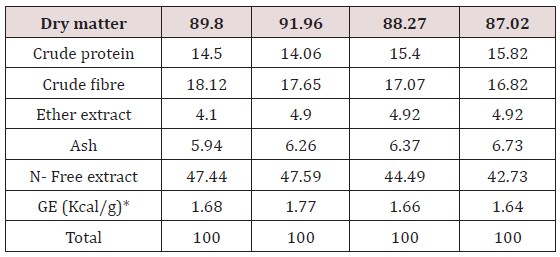
The composition and proximate assay of the experimental diets formulated to contain 0-30% boiled rubber seed meal (BRSM) are presented in (Table 1). The dry matter (DM) content of the diets, save for ration B (10% BRS), were fairly comparable (Table 2). The crude protein (CP) ranged from 14.06 – 15.82% and increased as inclusion levels of BRSM increased from B-D. Crude fibre (%) (CF) followed a reverse trend of the CP values. The ether extract (EE) composition (%) increased from diets A-D and stabilized in C and D. the ash contents (%) of the diets followed similar pattern as the EE, rising and stabilizing as the case was. Nitrogen free extract (NFE) values (%) rose from A-B and subsequently decline in diets C and D. The energy values (Kcal/g) followed similar trend as NFE. CP and energy content of the four diets were all above what is required by WAD goats as reported by Ahamefule [11], Akinsonyinu [17].

Table 1: Proximate composition of experimental diets containing various levels of boiled rubber (Hevea brasiliensis) seed meal.

Lupinepublishers-openaccess-Agriculture

Table 2: Chemical assay of experimental diets containing various levels of boiled rubber (Hevea brasiliensis) seed meal (%DM).

Lupinepublishers-openaccess-Agriculture

*Calculated, BRSM= Boiled rubber seed meal.

Response of West African Dwarf (WAD) Goats

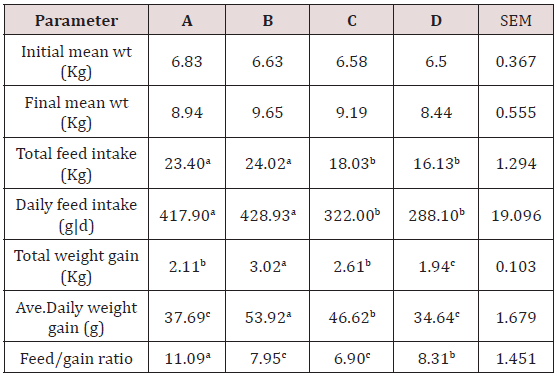
The performance of WAD goats fed various inclusion level of boiled rubber seed meal (BRSM) is shown in Table 3. Goats fed 10% BRSM consumed significantly (P<0.05) more feed (428.93g/d) than goats fed diets containing 0% (417.90 g/d), 20% (322.00g/d) and 30% (288.04g/d) BRSM. Goats fed diet A (Control) had similar intake (P>0.05) with goats fed 10% BRSM diet; their values were significantly different (P<0.05) with the feed intake of goats fed diets C and D. This may be due to the increasing levels of rubber seed meal from B-D which Gohl [18] reported that rubber seed is not quite palatable and appetizing to ruminant. However, the values obtained in this report is in consonance with previous reports by Spring [19] that feed intake and growth decreased as rubber seed meal (RSM) incorporation levels increased in poultry rations. Njwe [13] also reported that rubber seed is not quite appetizing to sheep and that RSM should not exceed 20% level incorporation and not more than 10% for poultry Babatunde [19] while Devendra [20] considered 20% as optimal inclusion level for pigs. The trend of intake in this study agrees with the report by Rajan [21] that weight gain was not affected when fed diet containing 20% BRSM, but subsequently, a linear decrease in feed intake and daily weight gain occurred as the incorporation of BRSM exceeds 20%. The feed gain ratio for goats fed 20% BRSM was least (6.90) and apparently best and was in line with the reports Njwe [13], Rajan [21] that small ruminants can utilize up to 20% rubber seed without adverse effect on performance. The average daily weight gain range of 34.64 – 53.92g obtained in this study compared favourably with the range reported for WAD goats within the first 12 months of life Nuru [22], Anya [23].

Table 3: Performance of WAD Goats Fed Experimental Diets Containing Various Levels of Boiled Rubber (Hevea brasiliensis) Seed Meal.

Lupinepublishers-openaccess-Agriculture

a,b,cMeans on the same row with superscripts differ significantly (P<0.05).

Feed Economy

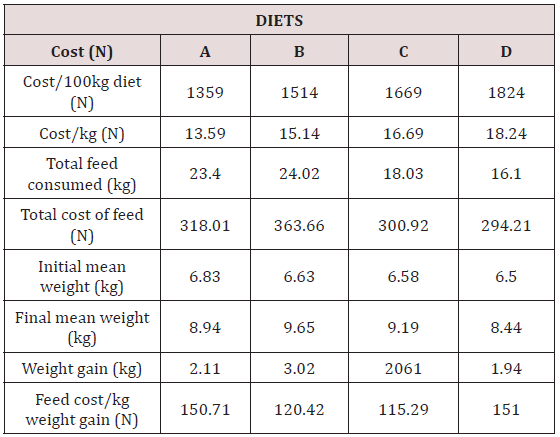
Table 4: Feed economies of WAD goats fed various inclusion levels of boiled rubber seed meal-based diets.

Lupinepublishers-openaccess-Agriculture

The economy of feeding WAD goats with various inclusion levels of boiled rubber seed meal (BRSM) is presented in Table 4. Daily feed consumed by animals in treatment A and B were similar, but the two groups differed significantly (P<0.05) from animals fed diets C and D that were also similar in their feed intake. Goats fed diet B (10% BRSM) supported highest daily weight gain followed by 20% and 30% respectively. The daily weight gain range (34.64 – 53.92g/d) reported in this study is lower than the range (35 – 65 g/d) reported by Nuru [22] for WAD goats. The feed cost per kilogram weight gain was N150.71 for goats fed diets A of 0% BRSM. The corresponding values for animals fed diets B, C and D were N120.42, N115.29 and N151.65 respectively. The result obtained in this study followed the findings trend of similar investigations by Ahamefule [11] and Anya [23]. They also reported superior feed cost per kilogramme weight gain for WAD goats fed diets containing 20% Pigeon pea and African yam bean respectively. For best yield returns on investment, incorporation of 20% BRSM in WAD goat’s diet is advisable.

Carcass Characteristics

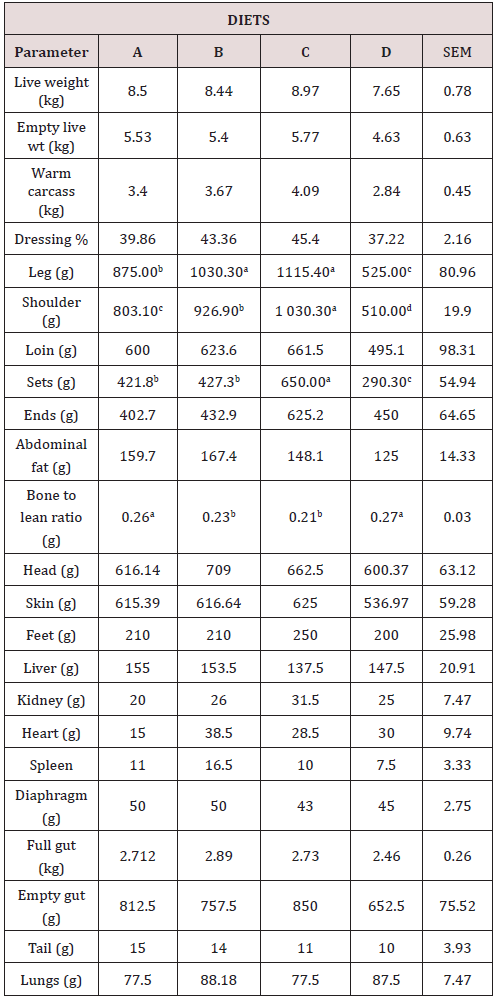
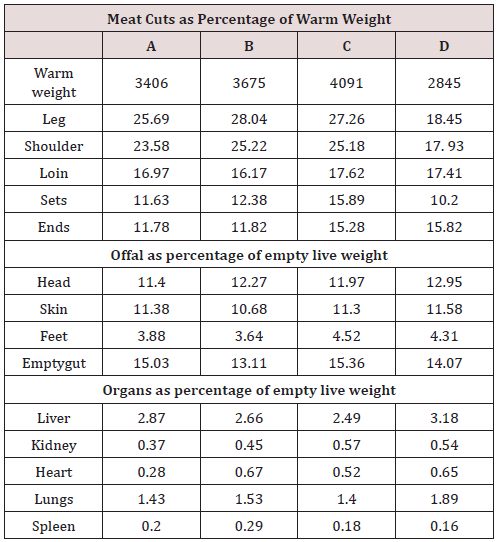
Table 5 shows the carcass yield of WAD goats fed graded levels of diets. The superior warm carcass value (4.09Kg) obtained for goats fed 20% BRSM was not significantly (P<0.05) different from the values of 3.40Kg, 3.67Kg and 2.84Kg recorded for goats fed 0%, 10% and 30% BRSM respectively. More so, there was no significant different (P<0.05) in their dressing percent, though goats fed diet C (20% BRSM) has a superior value of 45.40. The range of dressing percent (DP) obtained in this study (37.22 – 45.40) was comparable with the values (33.05 – 58.07) reported by Udo and Nuru (1985) 45 – 52% for WAD goats in different feeding trials. In Table 6 significant differences (P<0.005) only occur among treatment groups for leg, shoulder, sets and bone to lean ratio. The leg meat cut (g) was best for goats fed diet C (1115.40) and was not significantly different (P<0.05) from goats fed diet B (1030.30), but however differed (P<0.05) significantly from values for goats fed diets A (875.00) and D (525.00). In the shoulder cut (g), goats fed diet C had best cut (1030.30) which also differed (P<0.05) significantly from corresponding values obtained for goats fed diets A (803.10), B (926.90) and D (510.00) Goats fed 20% BRSM (C) diet had sets value (650.00g) which was superior (P<0.05) to other treatment groups. In all parameters investigated goats fed BRSM yielded superior meat cuts relative to other treatment groups indicating that it was best utilized of all the diets. The relatively high but comparable bone to lean ratio obtained for goats fed 0% and 30% BRSM diets in this study is an indication of high feed conversion efficiency by goats in group C (20% BRSM). This is also confirmed by the superior dressing percent (45.40%) and lowest (6.90) feed conversion ratio of goats fed 20% BRSM diet. The mean organ weight for the different group of goats fed the BRSM diets in Table 4-6 shows that all the organs (Liver, Kidney, Heart, Lungs and Spleens) weights were similar (P<0.05); they were not affected by the dietary treatments. Proving that all the inclusion levels of BRSM were safe as dietary concentrate for WAD goats but 20% BRSM diet gave outstanding performance in feed gain ratio, daily weight gain, dressing percent, meat cuts (leg, Shoulder, loin, sets, ends) and bone to lean ratio of WAD goats. Therefore for goat’s production/ fattening programmes, 20% inclusion level of boiled rubber seed meal is recommended as it also produced the cheapest cost per. kilogramme weight gain. This study has shown that if WAD goats are given right nutrition, sixty days could be used to fatten them to market weight, therefore making it possible for a farmer to carry out fattening programmes up to 6 times in a year. Thus generating good income for the farmer.

Table 5: Carcass yield of West Africa dwarf goats fed various levels of boiled rubber (Hevea brasiliensis) seed meal-based diets.

Lupinepublishers-openaccess-Agriculture

abcdMeans in the same row with different superscripts differ significantly (P<0.05).

Table 6: Average weight of meat cuts, organs and offal weights expressed as percentages of warm carcass or empty live weight.

Lupinepublishers-openaccess-Agriculture

Conclusion

This study revealed that boiled rubber seed meal generally enhanced performance at different level (10-30% BRSM) with all the inclusion levels being safe as dietary supplement for WAD goats. However, 20% BRSM inclusion level gave the best performance, and is therefore recommended for goat’s production/fattening programme as it also produced the cheapest cost per kilogramme weight gain.


For more Lupine Publishers Publons Click on Below link
https://publons.com/publisher/7295/lupine-publishers-llc

Friday, January 22, 2021

Lupine Publishers | Biogas and Dimethyl Ether are Providing Water, Fertilizer for an Intelligent Smart Soil

   Lupine Publishers |Agriculture Open Access Journal


Short Communication

Biogas is well known in agriculture and food industry. In Austria we realized a project Hagenbrunn [1] nearby Vienna/ Austria, a biogas plant running on waste food and liquid biogenic waste. The electric power output is given with 1320kW ele, the thermal heat generation is given with 1800kW thermal heat realized with warm water (95 °C/60 °C), the substrate feed is given with 25, 000t/year, and the digestate coming out of the biogas plant is 35000t/year. The biogas generation of the different substrates, like waste food, grass, potatoes (e.g.) is done by measurements, testing and calculation and leads to the biogas generated by fermentation in a range of 700Nm³/h up to 800Nm³/h, with a methane concentration of 50% up to 65%. The biogas plant Hagenbrunn [1] has a deep influence on the way of irrigation, the way of fertilizing in agriculture and vine culture. The biogas plant Hagenbrunn [1] has a deep influence on the regional jobs, the regional companies, it is acting like a knot and center of competence and initiating a lot of spin offs. The main advantage of the biogas plant is using biogenic waste as input substrate and therefore the communities are glad to have a sink using and converting waste food and liquid biogenic waste to biogas. Biogas from the plant is only an intermediate step. In the first realization step biogas is converted to electricity and heat.

In the next realization step the biogas plant was enlarged with a preparation of the digestate, to distilled water, solid particles and fertilizer, and the gasification of biogenic solids and the conversion of syngas from gasification of the biogenic solids, biogas from the biogas plant, and the waste biogas from the closed digestate tank to generate syngas with steam gasification and producing dimethyl ether. Dimethyl ether is stored in two tanks, with a volume of 30,000liters, and a filling station of mobile movable bottles substituting LPG by Dimethyl ether. Heavy tank trucks are transporting Dimethyl ether to the clients. The production of dimethyl ether in Hagenbrunn [1] is given by 800L/h, using 10,000t/ year biogenic solids, 80,000m³/h waste gas (CH4=5%, CO2=95%) from the digestate tank of the Biogas plant, and 400m³/h biogas (CH4=50%,CO2=50%) from the biogas plant. Additional heat from the CHP engine is used for drying the solids biomass to a moisture lower than 10%. The electric power needed for the production of dimethyl ether, for the drying process, and the generation of fertilizer and water from digestate is produced by the gasification plant. Now the Biogas plant now can convert liquid biogenic waste and solid biogenic waste and can so take over the waste from the region.

.

Biogas plant

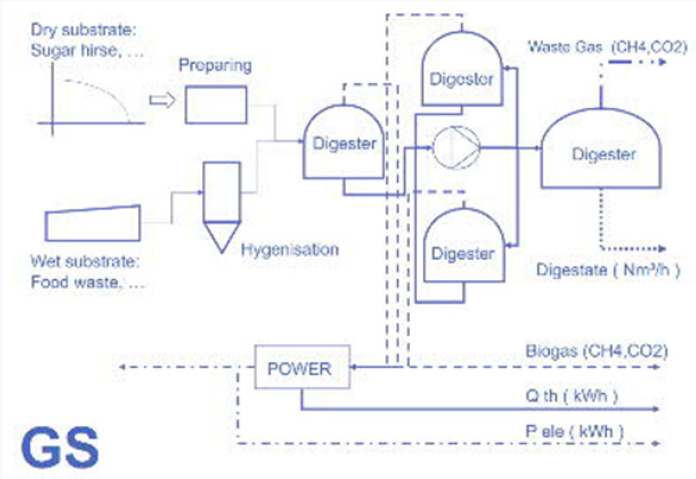
A biogas plant consists of substrate storage for at least a six months operation (Figure 1), buffering the different mass flow of substrate during the operation of a year. Additional we have a preparation of the substrates increasing the surface, and to prepare for the fermentation in the digester. Because of the wet process we have to mix the substrate with the fluid circulating in the plant between the digester by a pump (often called central pump). For the biogas process we have to understand biogas processes operating on waste, like food waste, manure, and substrates like corn, maize, beet. The process ends with a digester and the with a storage of the digestate (end product of the fermentation process). In input substrate is defined by the gas production of the fresh mass (measured, tested or calculated by formulas (Brick, Schumann)), the anaerobic fermentation process, and at the end to get back the digestate. The biogas resulting form the digester is collected and burned in a CHP engine to produce electricity and heat. But nobody needs electricity and heat, additional the earn of electricity and heat is very small, the economic situation becomes very bad. To get a feeling about the dimension, area, input, output, efficiency we have: electric power output: P=500kW ele, input feed: 17,500 t/year wet fresh substrate, output 15500 t/a digestate, generated heat Q(th)= 700kW th, generated biogas 300Nm³/h (50% CH4, 50% CO2), the agricultural area needed for supporting the biogas plant with waste is at least needed with 200 ha area. The area needed for the biogas plant itself is about 1 ha. With this correlation we plan and design the water consumption, water storage, fertilizer and soil needed. Additional the digestate resting in a tank is producing waste biogas (5% CH4, 95% CO2) with 40,000m³/year.

Figure 1: Biogas Plant.

Lupinepublishers-openaccess-Agriculture

Dimethyl ether

Dimethyl ether is well known. It is the simplest ether consisting of two carbon atoms, one oxygen atom and six hydrogen atom, molar mass MZ~ 46g/mol [2]. It is certificated by ISO 16 681: 2013 by the IDA. At a pressure of 6 bar Dimethyl ether is in liquid phase at an environment temperature of 25 °C [2] The simplest ether is synthetic and can produced with two pathways: the production in two steps in the first step over the intermediate product methanol (methanol synthesis) CO+ 2H2 ⟶ CH3OH+Q (-225 kJ/mol) and in the second step over dehydration (water removal) 2CH3OH ⟶CH3 OCH3 + H2O + Q (-15kJ/mol), or in the direct synthesis in one step 3CO+3H2⟶CH3OCH3+CO2+Q (-254 kJ/mol). The difference between both chemical processes is the energy (heat generated and needed) the resulting mass flows generated by the processes. The caloric heat value of dimethyl ether is given caloric combustion enthalpy Hc=1460kJ/mol [2], the formation standard formation enthalpy Hf =184 kJ/mol [2]. The combustion of dimethyl ether in diesel engines leads to nearly no soot, dust, a reduction of carbon monoxide and nitrogen oxide [3].

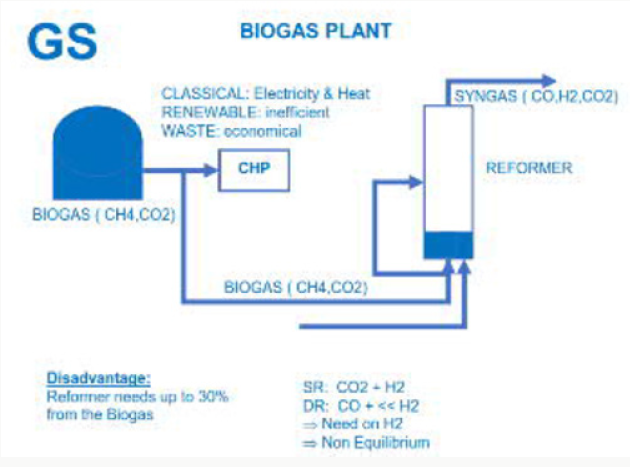
Figure 2: Biogas Plant and reformer for syngas.

Lupinepublishers-openaccess-Agriculture

Biogas to dimethyl ether

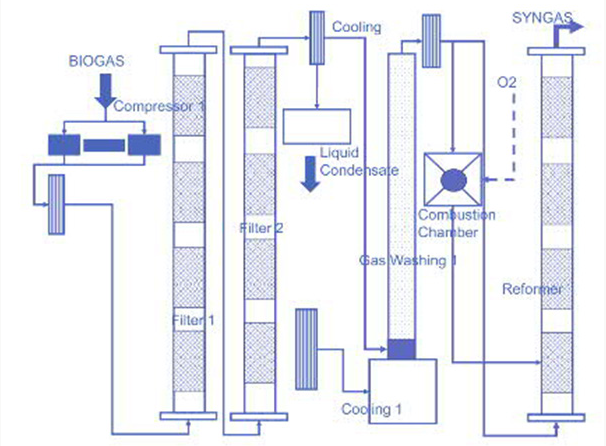
The convertion of biogas to dimethyl ether can be done in two pathways. One pathway is steam reforming of biogas, which leads to a snygas consisting of carbon monoxide and hydrogen and carbon dioxide (SR=steam reforming reaction) (Figure 2). CH4+H2 O⟶CO+3H2+Q (+316kJ/mol), or in combination with more steam (WGS = Water gas shift reaction) to carbon dioxide and hydrogen CH4+2H2O⟶CO2+4H2+Q (+ 161kJ/mol) (Figure 3). The second pathway is dry reforming of biogas to carbon monoxide and hydrogen CH4+CO2⟶2CO+2H2+Q (+251kJ/mol) [1]. In processes we need heat, generated from the biogas itself CH4+2O2⟶CO2+H2O+Q (-574kJ/mol). The gained syngas is then converted to dimethyl ether. The standard process of convertion of syngas to dimethyl ether consist of a gas compression up to 50 bar till to 100 bar, the reduction of carbon dioxide by cooling down the syngas and condensation of carbon dioxide and storing in a tank, the convertion of the syngas to methanol in one reactor, with recycling of the unconverted syngas and condensation of water and methanol mixture [1]. The condensate mixture is separated with distillation into process water and methanol. The methanol is dehydrated to dimethyl ether and the condensate mixture of dimethylether, water is separated with distillation into process water and dimethyl ether.2CH3OH ⟶ CH3OCH3+H2O+Q (-15 kJ/mol) [1].

Figure 3: Biogas Cleaning and syngas reformer.

Lupinepublishers-openaccess-Agriculture

Combination of processes

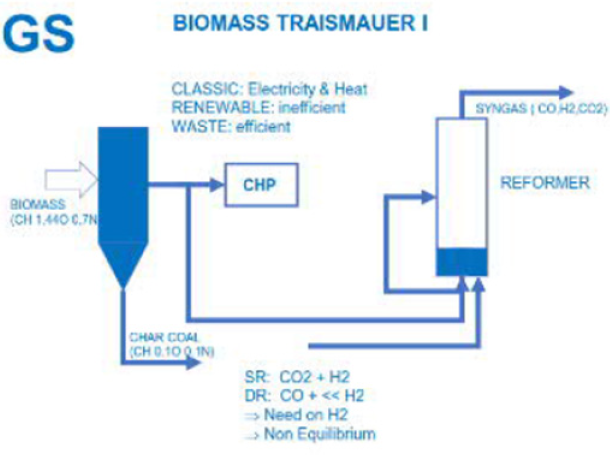
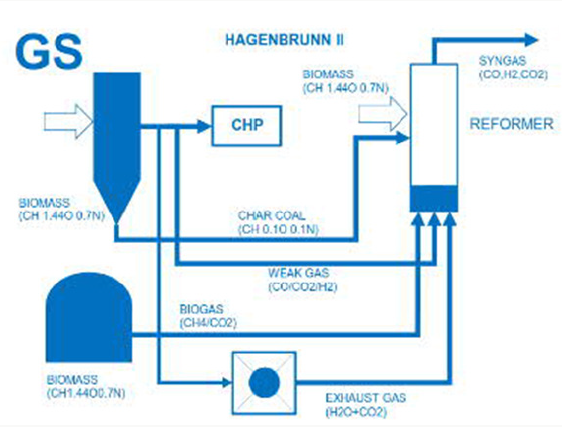
Figure 4 to increase the efficiency of a biogas plant the biogas plant is combined with a gasification plant. Such as gasification plant is realized in the project Traismauer in Austria [4]. The gasification plant converts solid biomass to weak gas mainly consisting of CO=20%, H2=23%, CH4=1%, CxHy=3%, Rest CO2, with a heat caloric value Hu~2.2kJ/m³, tar< 5mg/Nm³, dust < 5mg/Nm³ which is used to generate with a CHP engine (combined heat process) electricity and heat. Syngas from the gasification and char coal are converted with steam gasification to syngas with a steam reformer operating at nearly environment pressure and a temperature of 800 °C up to 1000 °C. The syngas composition is given by CO=30%, H2=30%, CH4=1%, CxHy=3% and the rest is CO2, with a heat caloric value Hu~2.8 kJ/m³. In the project Hagenbrunn [1] we combined the biogas plant with a gasification plant as done in the project Traismauer [2]. We call this gasification the bottom cycle producing weak gas with a caloric heat value Hu~2.2 kWh/ Nm³ (Figure 5). To generate the needed heat for steam (hv=2560kJ/ kg) and to superheat steam up to 800 °C till 1000 °C, we need a combustion chamber, in which the weak gas of the gasification plant is burned with oxygen to carbon dioxide and steam. Additional we use the biogas from the biogas plant in the steam gasifier and fine milled biomass mixed with char coal from the biomass gasifier. CH4+H2O⟶CO +3H2+Q (+206kJ/mol), C+H2O⟶CO+H2+Q (+145kJ/ mol). A very interesting property is given by using carbon dioxide in steam gasification C+CO2 ⟶2CO+Q (+180kJ/mol). The syngas has now a composition by CO=40%, H2=40%, CH4=1%, CxHy=3% and the rest is CO2 with a heat caloric value Hu~3.5kJ/m³, tar<0.5mg/ Nm³, dust<1mg/Nm³. This syngas is converted to dimethyl ether. From the CHP plant we generate the electric energy and heat needed in the enlarged biogas plant to run all processes.

Figure 4: Gasification plant and syngas reformer.+

Lupinepublishers-openaccess-Agriculture

Figure 5: Biogas Plant combined with a gasification plant and syngas reformer.

Lupinepublishers-openaccess-Agriculture

Intelligent smart soil

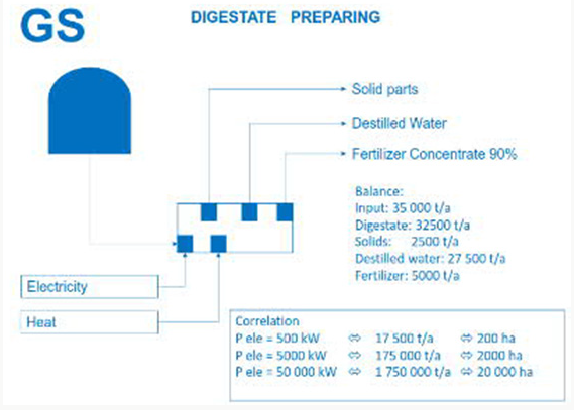
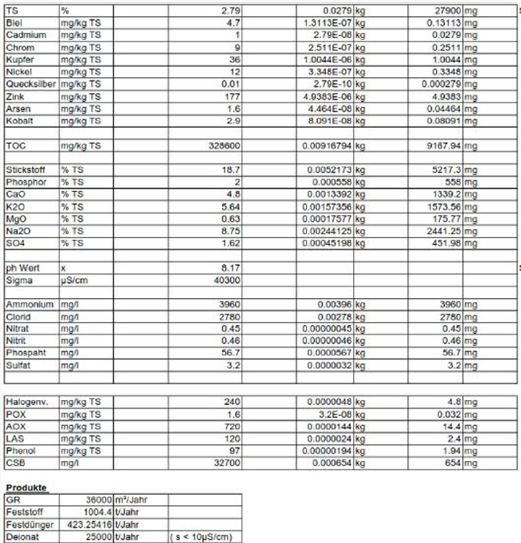
One of the main and central (Figure 6) parts of the project Hagenbrunn [1] is the conversion of the digestate into solids, water and fertilizer. The disadvantage for a classical Biogas plant, we need electric power and heat. In the project Hagenbrunn [1] we need P=150kW ele and Q=800kW thermal power for digestate 35,000 t/year. This is not efficient for a classical Biogas plant. Therefore we need additional heat and electric power and we need a high valued product like dimethyl ether to reach an energetic and financial efficiency to be worth for investment (Figure 7). First let have a look on the digestate from the Biogas Plant [1]. The digestate consist of metalöls like Cadmium, Chrome, Copper, Lead, Nickel, Mercury, Zinc, Arsenic, Cobalt, resulting from food itself. Under solid parts we understand organic particles and fibers coming out of the fermentation process, consisting of lignin, cellulose, hemi cellulose and poly sugars (called the TS=dry substance). Then we have the fertilizer parts like Ammonia, Phosphates, Calcium oxide, Potassium oxide, Magnesium oxide, Natrium oxide, Sulfates, Chlorides, Nitrates. The preparation process for the digestate is divided into two steps: the mechanical step, and the refining step of the liquid fertilizer.

Figure 6: Biogas Plant and up scaling digestate conversion.

Lupinepublishers-openaccess-Agriculture

Figure 7: Content of dig estate -Biogas Plant [3].

Lupinepublishers-openaccess-Agriculture

The first step is a mechanical separation of the solids out of the digestate. The digestate consists normally of 90% water, 3% up to 5% solid particles and 5% fertilizer solved in water. After the mechanical separation done with a sieve separator we use a fine sieve again to prepare the liquid digestate for filtration by membranes. The solid water mixture is like slurry is recycled in a water plant. The filtration process is closed with a membrane process, the ultra filtration stage (d~1μm) to clear and separate the collides from the digestate. Now we have reached a clear liquid fluid with solved minerals, oxides, carbonates, phosphates and sulfates. This is the first stage of usable for droplet irrigation. The advantage for this first stage: it is easy to reach, the electric power needed is P~50kW/Nm³ is very small. The disadvantage is we cannot influence the concentration of the solved minerals, oxides, carbonates, phosphates and sulfates itself. The clarified digestate from the first stage can be easily used for droplet irrigation, which saves more than 50% of water consumption. The needed electricity and energy is gained from the gasification plant and from dimethyl ether, which can be used as fuel for the diesel engine driven pumps transporting the water in the pipe lines on site outside the Biogas plant. So we save energy, we save water consumption and we have the possibility of installation of doplet irrigation. Those parameters are very interesting for investors and communities and companies in agriculture and food and wine industry forced to save costs, water and fertilizer. There is no need of continuing the wasting water by inefficient water irrigation and also the costs for synthetic fertilizer can be reduced.

In the second step we take now the liquid fertilizer and separate the water. We use the Nano filtration (d~0.01μm) to reach a high concentration of the solved minerals, oxides, carbonates, phosphates and sulfates, stored in a tank. Now we are in the position to dilute the high concentrate with water according to the demands of the clients. In the project Hagenbrunn [1] we also developed a step further. We are in close contact with the client and measure the moisture of the soil; we measure minerals, oxides, carbonates, phosphates and sulfates in the soil [3]. Although the biogenic plants, like a vine culture, are intelligent by it and can organize and influence the microbes by chemical substances in the soil, we now can support the plant culture with water, minerals, oxides, carbonates, phosphates and sulfates according to the measurements and the need. What do we understand under need: we measure the quality of the grapes, corn, fruits in the different growing state itself, depending on the temperatures, solar environment, and with this data we are now in the position to close the controlling cycle: the measurement of the actual state of the culture pant, the quality to be reached and the need on water, minerals, fertilizer. This all is realized in a digital process system and visualization for steady local watching and controlling. The realization of this project enables us to get a deep inside look into the structure and behavior of the soil and the growth of the plant and enables us to optimize and to increase the growth efficiency.

Closure

In the project Hagenbrunn [1] we have shown that a Biogas plant can be enlarged with a gasification [4] to generate electricity and heat, to support the production of dimethyl ether [5] and to prepare and separate the digestate from the Biogas Plant into distilled water and fertilizer [1]. Under these conditions dimethyl ether becomes a smart rural fuel with an impact on transportation, on water supply and consumption in agriculture and food industry and in the consumption of fertilizers. Additional the Biogas Plant is now converting to a center of competence influencing the regional companies and jobs and as a hot spot it is a part of a network. If we now spread of a region Biogas plants with a power of 5MW we cover up an agricultural area of 2000 ha up to 3000 ha. With Biogas Plants in the power range of 5MW up to 50 MW we can cover up a region of 2,000,000 ha agricultural area. With this network of Biogas Plant as hot spots in the region we can lower the water consumption, we can dramatically increase the production of dimethyl ether as a fossil Diesel substitute and we can reduce the synthetic fertilizer consumption. Additional we increase the jobs in the region and we supply. Biogas Plants costs investment, but the financial investment for private investors is much smaller than the investment of a congress or community in water pipe lines. Over a period of 15 years we develop the region sustainable and as an add on we save the environment. But this is not important for an investor looking for a low risk investment, and for opportunities in future. But the network of Biogas plant is not working against itself; the Biogas Plants are supporting the network, are supporting each other and therefore are stabilizing the infrastructure and environment [6-11].

For more Lupine Publishers Social Bookmarking Click on Below link

https://issuu.com/lupinepublishers-oaj/docs/lupine_publishers_social_bookmarking_sites.docx

Monday, January 11, 2021

Lupine Publishers | Fresh Water-an Emerging Global Concern with Special Reference to India

 Lupine Publishers |Agriculture Open Access Journal


Abstract

Increase in population requires increased demand of fresh water with the life style of people. Fresh water is a limiting resource and consequently there has been an increasing water stress in many parts of the world. Such a stress is assuming alarming proposition leading to conflicts and fights and may further aggravate the situation to an alarming level. An effort has therefore been made by the authors of the present paper to assess and present the situation at global and India level for evaluating and formulating the timely actions.

Keywords: Water; Global availability; Demand; Population; Water stress

Introduction

The world population was 2.5 billion in 1950, 4.4 billion in 1980, 6 billion in 2000 and projected to grow to 8 billion in 2025 and further likely to increase to 9.3 billion in 2050. Majority of this growth will occur in urban areas of developing countries (UNDESA, 2002). Such an increase in population coupled with higher standards of living will pose enormous strains on land, water, energy, and other natural resources. In the present context, the growing population and resulting demand for water is one of the most significant global concerns facing the mankind currently and in future. The availability and quality of freshwater resources around the world are of growing concern along with growing climate change which has resulted into misbalancing water resources [1].

Understanding the problem of freshwater scarcity begins by considering the distribution of water on the planet. Approximately 98% of our water is salty and only 2% is fresh. Of that 2%, almost 70% is snow and ice, 30% is groundwater, less than 0.5% is surface water (lakes, rivers, etc) and less than 0.05% is in the atmosphere. Climate change has several effects on these proportions on a global scale. The main one is that warming causes polar ice to melt into the sea, which turns fresh water into sea water, although this has a little direct effect on water supply

Global Water Budget

It is estimated that the world contains about 1.4 billion (1,386 million)km3 of water (Shiklomanov, 1998) which is enough to cover the entire globe with a layer of water 2,718m deep (Shiklomanov, 1993). It is aptly said that water is difficult to create or destroy under most natural conditions and thus it recycles globally through its three states of liquid, solid, and vapor [2]. As a result, the total quantity of water on Earth today has remained relatively constant since approximately 2 billion years ago (Christopherson, 2002). Out of the total water available on earth, 2.5%, amounting to about 35 million (35,029,000)km3 is freshwater and if all this water was located on the surface and evenly distributed, it would be enough to cover all the continents with a layer of water 235m deep (Shiklomanov, 1993). However, approximately two-thirds of this freshwater (24,364,000km3) occur in the form of permanent ice or snow in polar and mountainous regions and is not readily accessible for use [3]. Hence, liquid freshwater (including atmospheric vapor and biological water) available is only 10,665,000km3, or 0.77% of the global water resource [4].

The most of the fresh water is available as ground water which is to the tune of 10,530,000km3 or 98.7% whereas less than 1 percent of the order of 104,620km3 occurs in lakes, marshes and wetlands, and rivers, and only 0.1% amounting to 12,900km3 is in the atmosphere as water vapor. However, useable freshwater comes from rainfall which is generated through the hydrologic cycle and this water is recycled continuously as a result of evaporation driven by solar energy [5]. The water evaporates from the oceans is of the order of 502,800km3/yr which falls on the earth as precipitation to the tune of 458,000km3/yr resulting in continuous transfer of freshwater from the ocean to the land. However, the average annual rainfall over land accounts to 119,000km3/yr which is only 20% of all precipitation over the Earth out of which around 74,200km3/yr evaporate back into the atmosphere (Shiklomanov, 1998). It may however be noted that countries are defined ‘water stressed’ when annual water supplies drop below 1,700m3/ person whereas ‘water scarce’ when drop below 1,000m3/person. A country is defined as high water stress if demand is greater than 40 percent of the renewable water supply [5].

Indian Scenario

India has 16 percent of the world’s population whereas only 2.5 percent of the worlds land area and 4 percent of the world’s water resources at its disposal. Around 4,000 trillion liters of fresh water is provided through precipitation in the form of rain and snowfall in India out of which majority is returned to the oceans via rivers and a portion of this water is absorbed by the soil which is stored in underground aquifers whereas smaller percentage is stored in inland water bodies such as lakes, ponds, tanks and reservoirs [6]. It has been estimated that around 1,869 trillion liters of water reserves are available in India out of which only an estimated 1,122 trillion liters can be exploited due to topographic constraints and distribution effects [7]. However, the demand for water has been increasing at a high pace in the past few decades and the current consumption in the country is approximately 581 trillion liters with irrigation requirement as high as 89 percent followed by domestic use at 7 percent and industrial use at 4 percent [8].

The rapid increase in population, urbanization and industrialization has resulted into significant increase in water requirement in as much as that industrial requirement is expected to be doubled from existing 23.2 trillion liters to 47 trillion liters in next decade whereas domestic demand is expected to grow by 40 percent from 41 to 55 trillion liters while irrigation will require only 14 percent amounting to 592 trillion liters from existing 517 trillion liters. It has also been estimated that demand in the country will very soon overtake the availability of water. However, in some regions of the country, it has already happened. As per the Ministry of Water Resources, Government of India the per capita water availability in 2025 and 2050 is estimated to come down by almost 36 percent and 60 percent respectively as compared to 2001 levels.

India has turned into water deficiency country and over the coming years the demand scenario is projected to become worse in as much as that water supply for the average citizen could drop from an average of 105 liters to only 65 liters a day with a large section of the population having no access to potable water. There has been a regional disparity in availability of water across the country due to uneven rainfall and most of Indian cities, including Chennai and Mumbai, depend on rainfall for their yearly water supply. Moreover, groundwater levels have reduced significantly for the last 60 years and as a result out of total 5723 blocks assessed across India by the Central Ground Water Authority, 839 have been found to be overexploited, and 226 are classified as critical, while 550 are under the semi critical stage.

Conclusion

Fresh water availability is essential for the survival of human kind and supporting attributes but with the growing population with increasing life style, the needed fresh water demand is posing threat to the available resources. In Indian context, the most of fresh water occur on account of rain fall but majority of which is discharged in oceans through rivers. Therefore, there is a strong need with commitment to interlink all the Indian rivers so that fresh water is not allowed to be wasted by entering into oceans. If such an arrangement is made, the availability of fresh water will be distributed across the country to avoid regional disparity.


For more Lupine Publishers Social Bookmarking Click on Below link

https://issuu.com/lupinepublishers-oaj/docs/lupine_publishers_social_bookmarking_sites.docx

Friday, December 18, 2020

Lupine Publishers | Primary Determinant in Quality Deterioration of Fish Seed in Captivity

   Lupine Publishers |Agriculture Open Access Journal


Abstract

This study was primarily undertaken to review the current status of fish seed production at freshwater sector of West Bengal, Bihar and Assam – three leading seed producing states of India (Figure 1) and its distribution range within the state and throughout the country. Main emphasis of the work was to assess how far the current practices are following the principle objectives of the technology i.e. production and supply of quality seed out of captive breeding. With the immediate standardization of the technology, West Bengal farmers adopted the technology of their own (in 98% cases) and started practicing the technology, initially through hapa breeding and afterwards through the establishment of Chinese hatchery. The realization of huge profit margin within a short period (4-6 months), attracted people from diverse sectors and soon mushroom hatcheries came, who started practicing seed production by learning the mechanical aspects of the technology from neighboring farmers.

The profit-making proposition attracted farmers from Assam and Bihar, who by learning the mechanical aspects of the technology from ignorant fish breeders of Bengal, started seed production in captivity by hiring skilled laborer from Bengal, which continues still today. Even today the entire hatchery operation in Bihar and part of the hatchery operations in Assam is under the control of hired people from Bengal. Misappropriation and profit-making proposition [1] of the technology and subsequent deterioration of quality starts from this point. In the subsequent years, the fish breeders, not being apprised of their faulty breeding practices due to want of any primary training on their part, used the technology only for profit. In the compromization with quantity, quality lost its fragrance and as a consequence a worthy technology became a curse in disguise for the sector.

Within very short period of introduction of technology, the ignorant farmers started practicing improper breeding practices like mixed spawning, use of small number of under aged and undersized breeding population and indiscriminate hybridization for their profit and convenience. Mixed spawning leads to hybridization inadvertently and ultimately affect the native gene pool. Maintenance of small number of founder population leads to inbreeding and the obvious genetic consequences are the increased fry deformities (37.6%), decreased food conversion efficiency (15.6%) and fry survival (19%). Again, the undesirable hybrids [2,3] when find their way into natural system results in “genetic intermixing” and affects the genetic biodiversity of the native fish fauna of Bengal. Along with these the fish breeders are introducing alien fishes almost every year without maintaining any code of practice. This alien introduction and repeated use of unauthorized drugs and feeds (composition totally unknown) severely affecting the native biodiversity and unless checked early it may lead to the extinction of some of the prized fishes of Bengal.

Keywords: Seed quality; Misappropriation; Mixed spawning; Genetic intermixing

Introduction

Indian carps are seasonal breeders and gonadal recrudescence in these fishes occurs after vernal equinox i.e. on 22nd March prior to breeding seasons [4]. These fishes develop eggs but cannot shed them in captivity. To overcome the demerits of natural collection of spawn, the techniques of induced breeding otherwise known as hypophysation was developed in experimental condition. The technique later transferred to field condition, which revolutionized the fish seed production and trade in Bengal in particular. It is observed that Bengal fish seed producer’s/hatchery owners, being illiterate and totally unaware of the scientific basis of the technology; inadvertently use the technology only for profit making purpose. In most cases the farmers learn the technology from the neighboring farmers and there was complete absence of any institutional transfer or training program and follow-up action. The Bengal farmers adopted the technology very well and shouldered the responsibility to produce more than 70% fish seed requirement of the country. At the same time, the farmers modified and refined the technology time to time with their innovative approach From Bengal the technology was transferred to Assam first and then to Bihar, while farmers of both the states visited Bengal hatcheries, may be at the end of seventies. The farmers of both the learn the technology from the ignorant and illiterate fish breeders of Bengal and for establishing hatcheries in their individual states hired skilled labors from Bengal. This indicates that initial establishment and implementation of such a novel technology were done without any scientific approach of program.

Now, with the standardization of the technology and entry of more and more entrepreneurs and business sector, a competitive approach developed among the fish seed producers. This led the farmers to adopt some unfair means and use the technology for profit making purpose. This includes mixed spawning, indiscriminate hybridization (and introduction alien species from neighboring countries. Added to this the farmers out of ignorance never considered potency of the gland and started using immature fishes due to scarcity of brooders during breeding seasons. All these phenomena resulted in serious genetic consequences like inbreeding, genetic introgression etc. The obvious consequences are the negative impact on stock integrity and genetic biodiversity of the native fish fauna. Target oriented research program with strict imposition of laws need to be initiated to check the further loss in biodiversity and maintaining sustainability.

Materials and Methods

The study conducted involving the leading hatchery owners in some of the major seed producing districts of West Bengal, Assam and Bihar. A questioner schedule was prepared and detailed field information was accounted based on the schedule. Fish breeders were interrogated and detailed information were documented regarding the present mode of the application of the technology. The data were compiled and presented in the text. The photographs presented in the text were taken during the field study. Initial study started with West Bengal as it was the pioneer state in implementing the technology, the technology for quality seed production in captivity. Then we proceed to Assam and Bihar as because after standardization of the technology in West Bengal it was transferred to the said two states from West Bengal hatcheries.

In case of Assam, the farmers turned fish breeders learn the technology from the ignorant and illiterate fish breeders, after visiting West Bengal hatcheries during late seventies or early eighties. The scenario of implementation of technology in Bihar is somewhat different. It was envisaged during visit that the entire hatchery operation is controlled by some ignorant hired fish breeders of Bengal, locally known as fish doctor. Even the doctors carry entire batch of pituitary gland with them from West Bengal. The entire operational procedure of implementation of the technology in captivity itself indicate how such a novel technology lost its significance within a period of 30 years and went away far away from its original goal to produce quality seed in captivity. Out of field study 25 hatcheries from each state were selected for and the operational procedure was incorporated in the present paper

Results and Discussion

The quality deterioration of seed, through the implementation of induced breeding technology, started with the following misappropriation.

Dissemination of Technology

The quality deterioration starts with the faulty implementation of the technology, after its discovery at the CIFA centre of Indian council of Agriculture Research, Orissa, India. The transfer of technology, if we count the codes of transfer of technology, developed in the scientific laboratory, here induced breeding technology, didn’t follow the code of practice of transfer. Here, we may consider it as an adoption instead of transfer as because the pioneer fish farmers turned fish breeders adopted the technology of their own from neighbouring 1 or 2 hatchery owners, who learned only the manual aspects of the technology from Govt. Official. Very soon Mushroom hatcheries has come up in and around two districts of West Bengal, India, and in most cases the fish farmers learned only the manual aspects of the technology as there was, practically, no initiation from the Govt. Sector and/or Institutional level to appraise the fish breeders about scientific basis of the technology at any level. Quality deterioration starts with the very first step of unscientific dissemination and as the short-term profitmaking quality is appraised, more and more people opted for captive breeding program by learning only the manual aspects of the technology.

Improper Potency of Pituitary Gland

At the initial stage, before the discovery of synthetic inducing agents like Ova prim, Ova tide, Wova FH etc., pituitary gland was the sole inducing agent. Following the principle of induced breeding, for initiating complete spawning, a pituitary gland should have the right potency. As indicated a rightly potent gland would be that one which is collected from the properly matured fresh fish i.e. fish should be in the 2+ age group and freshly collected. Initial dependence on pituitary led to the development of a chain comprising of gland collector, retailer and supply chain. Collectors are hired persons by the retailers and collects gland from the beheaded head parts of the ice preserved fish from the market. The second phase of the quality deterioration occurs with the collection of impotent pituitary gland about which all involved, from gland collector to fish breeders are not concerned out of ignorance and illiteracy. Final impact is the reduction in population size with consequential genetic phenomenon like inbreeding, genetic drift etc.

Brood stock – its Availability and Management

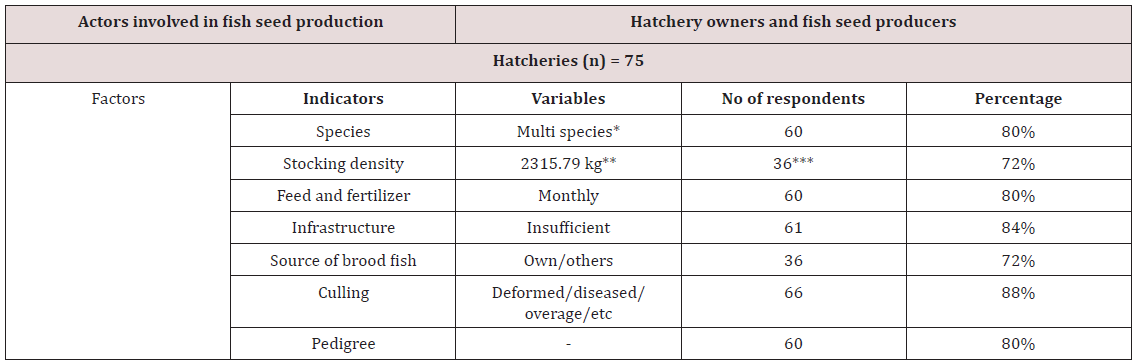
In a breeding program, the primary input is the readily available male and female fish at the peak of their maturity stage. Along with maturity age and size of the brood fish is also an important consideration for the successful spawning. According to the principle of induced breeding a brood fish in the age and size group of 2-5 is suitable. Collection of brood stock in adequate number from different geographical territories, cataloguing of their geographical origin, their genetic characterization and maintaining their pedigree record are important pre – requisites for breeding program. These aspects are of much genetic relevance for a scientific breeding aiming at quality seed production. Further proper feeding of brood stock and their health maintenance are some important management aspects. Different fish show considerable variations in the number of eggs develop i.e. Fecundity varies. As fecundity refers to number of eggs/kg of body weight so it is easy to assess the requirement of brood stock for production of specific number of eggs. The dietary intake of blood stock found to have profound influence on maturation and fecundity of fishes. Experimental results indicate decreased egg production (75%) when ration size reduced to half, again decreased ration size during second half of reproductive cycle decrease egg size (Table 1).

Table 1: Brood stock management practice in the area of study.
Lupinepublishers-openaccess-Agriculture

*(>6 species); * *Average; *** (>1500) kg.

Infrastructure for Brood Stock Raising

The available brood stock raising area, nursery, spawning pool, hatching pool, brood stock biomass etc. available in the hatcheries of study area was insufficient. Altogether, 84% of the hatchery owner had insufficient area for growing of brood stock in their farm (Table 1). Formula for calculation of the area required for brood fish pond according to Thomas (2003) is:

ABRP = BR×1/SD, where

ABRP = Area of brood fish production pond

BR = Weight of brood fish expressed in kg

SD = Stocking density of brood fish per ha.

Source and pedigree of brood stock

The study revealed that 72% of the hatchery owners do not have sufficient numbers of brooders to sustain the level of spawn production in their hatchery (Table 1). The small farmers depend entirely on outside source for collection of brood fish prior to breeding programme. The big and medium farmers depend both on farm raised and outside source. It was observed that 62% (average) of the total brood fish comes from farmers own pond and the rest 38% (average) comes from outside source and share basis prevalent among the farmers. The breeders in the hatcheries (80%), visited during study period, are least bothered to know the pedigree of fish stock they have for the breeding programme to be carried out in their farms (Table 1). None of the farms were found to maintain pedigree record of the brood stock, repeatedly using for seed production since long back, required to avoid the mating of close relatives. Cultured populations should be identified by using a proper marking system. Females & males should be from two different lines.

Culling

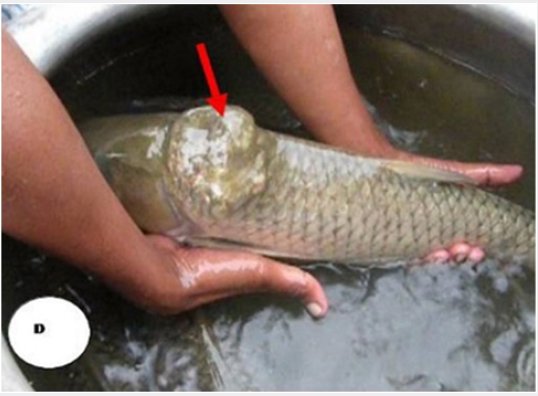
The practice of eliminating or culling of fish from the breeding programme is the necessity of the modern breeding programme. The culling of fish could be based on the criteria based on the phenotype of fish such as growth, disease, deformity, age, size, and most catchable fish than least catchable during harvesting. No such activity was adopted by any of the fish seed producers of the study area, instead one of the breeder was seen injecting a grass carp fish for induce spawning with a tumour like lump on the skull region of the fish (Figure 1). According to the information provided by him, it was learnt that he has been breeding the same fish for the last couple of years. Table1 conforms that majority of the breeders have no idea about the importance of culling of fish from the breeding programme. Quality deterioration finds its easy routes when a diseased fish used as brooders.

Figure 1: Tumour like lump on upper Cephalo -thoracic region, a potent candidate as brood fish.
Lupinepublishers-openaccess-Agriculture

Feed and fertilizer

Majority of the hatchery managers do not have proper feeding schedule for the brood stock or nursery management and provide (80%) feed and fertilizer on monthly basis (Table 1). It is just before the start of the breeding season there is a change in feeding schedule. From February onwards, protein rich feed composed of cereals, broken rice, fish meal etc., after boiling in large pot (karai) are broadcasted in the pond arbitrarily two times a day, without any consideration to the bodyweight. In West Bengal and Bihar, the farmers and fish breeders are more interested in using floating feeds, the reason, as they advocated that as the feeds are floating so it helps them to gaze the amount of feed required by the total biomass, besides it creates no pollution. Whatever it may be the entire supply chain of all the aquaculture products like feed, medicine, chemicals, probiotics and inducing agents are under the control of some unscrupulous middleman/agents. Many a times these products fail to fulfil the criteria of the specific needs for which they are used. The consequences are that the users are deprived of getting the expected results.

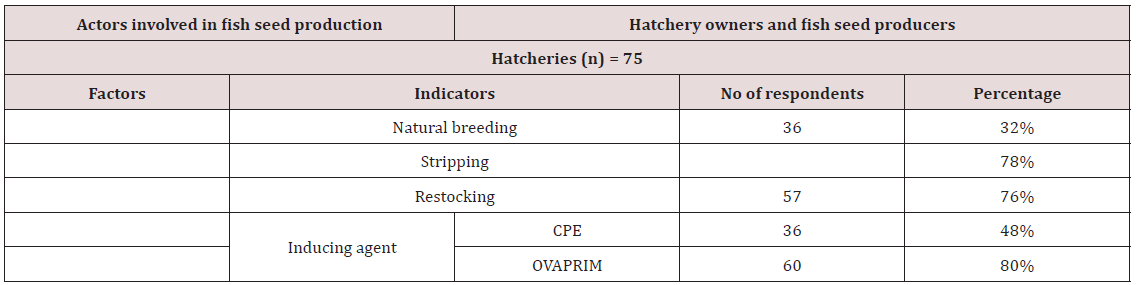
Table 2: Breeding Practices as adopted by the Fish breeders of Three States.
Lupinepublishers-openaccess-Agriculture

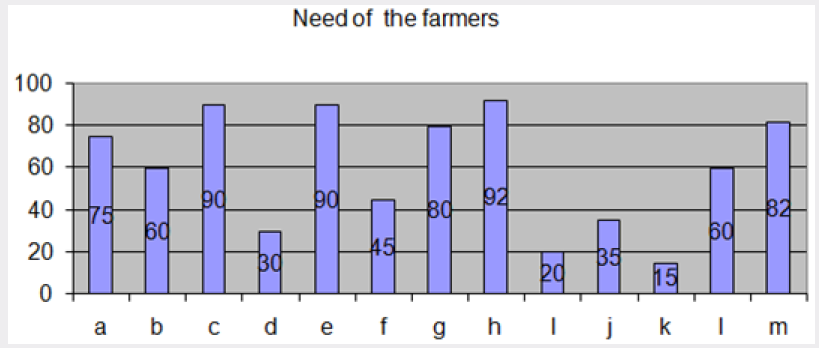
Figure 2: Need of the farmers as quantified (%) from the survey. (a=specialized training, b=Institutional Finance, c=soil and water testing d=institutional coverage, e=organized fish seed market, f=unhealthy competition, g=exemption of taxation during transportation, h=introduction of new species, i=change in land revenue act, j=supply of quality food, k=removal of discrepancy in breeding program, l=supply of quality brooders m=specific aquaculture medicine).
Lupinepublishers-openaccess-Agriculture

As indicated, the actors involved in operating the captive breeding program are totally ignorant about scientific basis of the technology and they are using the technology only for profit making proposition. Mixed spawning, multiple breeding (Figure 2) is the normal practice due to convenience and profit. Mixed spawning (more than 80%), is mainly undertaken to cut the water and electricity budget, as because in case of single species breeding, separate breeding pool is required. Mixed spawning leads to indiscriminate hybridization resulting in genetic introgression and other related consequences [5].

In Bihar the entire hatchery operations are under the control of some hired skilled labourer, but in Assam the operations are partly under the control of some hired skill labourer from Bengal. Not being appraised of the basic principles of the technology and to meet the demand of the customers as also to fulfil the profit of the hatchery owners, they adopt all sorts of misappropriation, starting from the use of impotent gland to mixed spawning, hybridization, multiple breeding, use of under aged diseased fishes as brood fishes. Cross verification of some of the leading hatchery owners of three states emphatically said that in more than 80% cases the fish breeders adopt all sorts of misappropriation to achieve their target.

Problems & Suggestions from Farmers

a) Inadequate technical know how

b) Finance

c) Poaching, poisoning of water body

d) Labor dispute, flooding and water logging of the farm sit

e) Availability of quality pituitary gland

f) Excavation of pond in agriculture land

g) Selling of fish seed on 3rd and 4th day of incubation.

8. Suggestions from the Fish Breeders/Farmers

a) Institutional Training Program

b) Changes in Land Revenue Act.

c) Easy Finance.

d) State wise Hatchery establishment for reducing mortality during transportation.

e) Standardization in breeding should be stopped.

f) Dishonesty in breeding should be stopped.

g) Some progressive farmer suggested that household waste water should be drained to a common place on a cluster basis and may be used for backyard fish farming so that some kind of social fishery might be developed. The farmer also suggested that suitable drainage plan should be incorporated during the plan making of house building.

h) Poaching should be stopped.

i) Management of water quality.

j) Subsidy in electricity.

Conclusion

The study indicates that how proper and scientific dissemination of a technology is important for sustenance of the technology. Here, illiteracy, ignorancy on the part of fish breeders about the scientific basis of the technology plays a negative role against its proper implementation. This is the 1st phase of the beginning of quality deterioration of fish seed in captivity. The initial phase starts with use of impotent gland in most of the breeding program. With the increasing demand for quality carp seed from captivity, the demand for pituitary glands were becoming more ex-pensive and their availability is decreasing. Often, batches of these pituitaries are bad as they are collected from the market where dead fishes are preserved under ice. Decrease in their potency is leading to failure in spawning. To overcome these problems, induced spawning of carps and other important fishes, in many countries, are now carried out with GnRH or its analogue [6] which release endogenous GTH and effects spawning in a much confident manner than the crude pituitary extract.

Besides, Pituitary extract very often also contains pathogenic micro-organisms causing infection in fishes. Moreover, pituitary GTH is glycoprotein in nature and is extremely sensitive to temperature denaturation. Hence, GnRH is no doubt a better alternative for induced spawning. But there is one problem with GnRH use; its activity is inhibited by endogenous dopamine. Dopamine occupies GnRH-receptor and thus blocked its action on pituitary gonadotroph cells. Use of domperidone (or pimozide), a dopamine antagonist, increases GnRH-receptor capacity, thus enhancing GnRH responsiveness [7]. Therefore, for induced ovulation, together with salmon GnRH-analogue, pimozide (antidopamine) has been use. On the basis of information, Ova prim, a commercial product has been prepared by the Syndel Laboratories, Canada, which is now marketed by Glaxo Laboratories Ltd for induced breeding of fish.

Though Assam breeders exclusively use synthetic hormones, the West Bengal and Bihar breeders still use the pituitary extract as the primary inducing agent. They claim that pituitary is more effective in stripping and also put blame about the ineffectiveness of synthetic hormone in many cases. Comparative study on the efficacy of two inducing agent on individual species may help in dissolving confusion.Though brood stock can maintain on maintenance ration but recent information, as revealed by various experimental results, indicate deficiency of certain dietary ingredients such as fatty acids (PUFA), vitamins, trace elements, can have negative impact on maturation, breeding, spawning, larval vigor and survivality. Keeping in mind that nutritional requirement varies according to species, proper experiment should be designed to formulate right food for individual brood stock so that supply of quality seed will be ensured to the farming sector.

Experimental study on wild stocks of C. catla represent a diversified genetic resource and indicates that in situ management practices, such as preventing the wanton capture of fish and creating sanctuaries for protecting small stocks such as those in major rivers, can help maintain and conserve the present diverse gene pool. Hatchery owners are accustomed to operating negative selection and polygynous breeding systems in which some males mate with many females year after year, resulting in genetic deterioration that subsequently cause a negative impact on aquaculture production. Based on our present findings, hatchery owners can collect their brood fish or replace their existing breeding populations with genetically diverse fish from stocks like those in the rivers and increase their effective breeding populations and thus improve the aquaculture production. However, the strict implementations of correct management practices are essential to maintaining the genetic diversity of the natural stocks.

Table 3: Faulty Approaches in Breeding practice & related criteria.
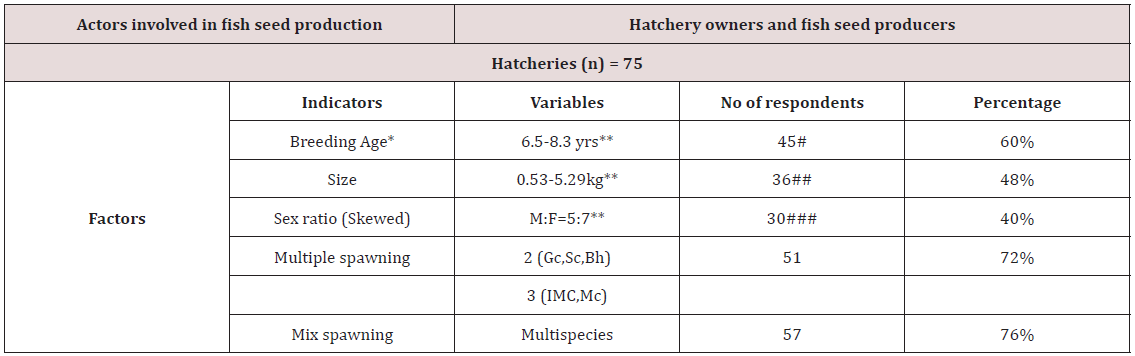
Lupinepublishers-openaccess-Agriculture

A further important point is that breeding between two genetically discreet or distant populations may have a positive impact on aquaculture production. As indicated in Table 3 due to dire scarcity of brood fish, except large hatchery owners there was no organized brood stock management practice, the fish breeders adopt all sorts of misappropriation to manage the customers demand. This create some important avenues for quality deterioration of seed in captivity, Mixed spawning, another profit-making approach by the fish breeders, leads to genetic introgression [8] among the genetically flexible different species of fish [9] while repeated use of small number of founder population for seed production results in inbreeding. All these faulty breeding practices throughout the years has eroded the qualitativeness of the technology, as established by the frequent claim by the seed buyers regarding the poor performance in terms of growth in particular. Other related criteria like use of skewed sex ratio and immature brood fish are also producing negative impact against quality of seed. A consolidated program from Govt. and institute level need to be initiated for general appraisal of the misappropriation with implementation of suitable laws banning the faulty practices can provide sustainability to such a novel technology [10].

In all, it can be said that the first criteria to consider the development of aquaculture sector is the steady availability of quality seed locally (within the states and country) to meet the requirements of the industry. Where ever this has not been possible, seeds and /or brood stock may be introduced through certification. It is encouraging to observe that we are in a stage where the emphasis is slowly shifting from quantity to quality. Only in very recent years farmers began to realize the importance of quality seed i.e. pathogen free uniform size seed to remove their sufferings and to maximize production. It may not be entirely wrong to say that this shift in emphasis (attitude) to seed quality has come about largely because of the recurrent disease problems that has besieged the aquaculture industry especially shrimp and fresh water prawn.


For more Lupine Publishers Social Bookmarking Click on Below link

https://issuu.com/lupinepublishers-oaj/docs/lupine_publishers_social_bookmarking_sites.docx

Lupine Publishers Journal of Agriculture and Current Research

Nutrients Intake and Digestibility of Wild Cocoyam (Caladium Bicolor) based Diets by West African Dwarf Bucks Abstract   Feed consumed by ...